Kawagoe Day Trip from Tokyo: Little Edo in Half a Day
How to do Kawagoe from Tokyo in half a day: the Tobu Tojo train from Ikebukuro, the warehouse street, the candy alley, Kitain's 500 rakan, and what to eat.
Places checked against official pages by Roam Tokyo, October 2026 How it's made
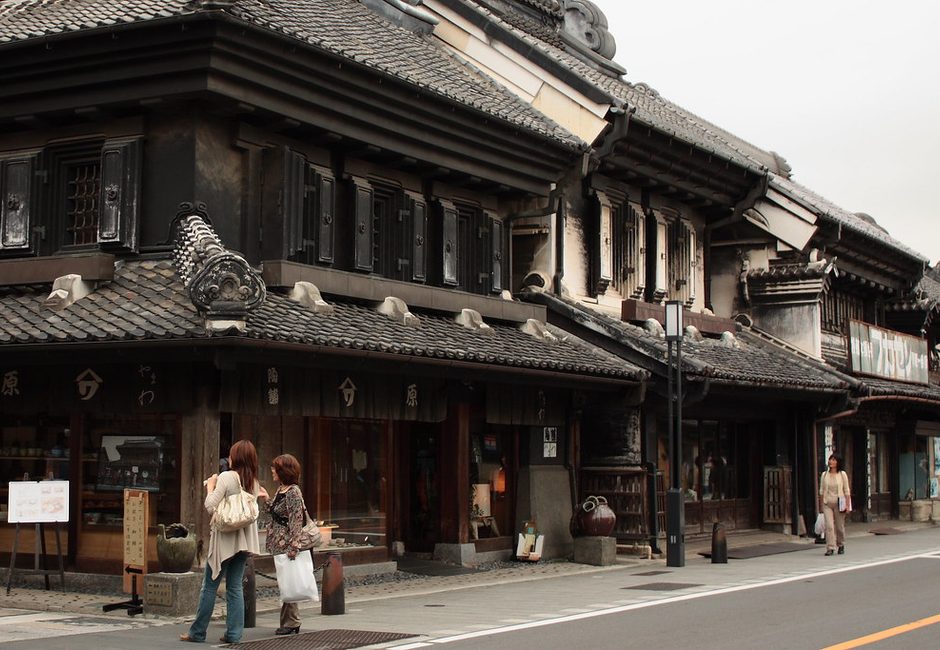
Kawagoe is the day trip for people who don’t have a day. It’s thirty minutes from Ikebukuro, and you step off the train into a merchant town that made its money supplying Edo by river and spent it on fireproof clay-walled warehouses, which are still standing. The main street of those warehouses, the bell tower that has told the town the time for centuries, a candy alley, a temple holding rooms moved from Edo Castle and a shrine strung with wind chimes in summer all fit inside a kilometre or so, and you can walk the lot between a late breakfast and a mid-afternoon train back. Kawagoe is pinned on the Tokyo travel map with the other day trips, and its place page has the station and cost details at a glance.
It suits three kinds of visitor. Anyone whose trip is too short for Nikko or Hakone but who wants one old-Japan streetscape without a two-hour train. Anyone travelling with people who don’t hike. And anyone looking at a grey forecast, because Kawagoe works in drizzle in a way a mountain or a lake never will. It doesn’t suit people hoping for nature or scale. This is a small town, and the point is the texture of the street rather than any single monument.
Getting there from Tokyo
Three railways run to Kawagoe, and which one you take depends on where in Tokyo you start.
Tobu Tojo Line from Ikebukuro. The fastest and simplest. Express services reach Kawagoe station in roughly 30 minutes for around ¥500 one way, several times an hour. If you’re staying anywhere on the west side of the Yamanote loop, this is your line. Tobu also sells a Kawagoe discount ticket that bundles the return fare with small discounts in town. It saves a little, not a lot. A Suica or Pasmo works fine otherwise.
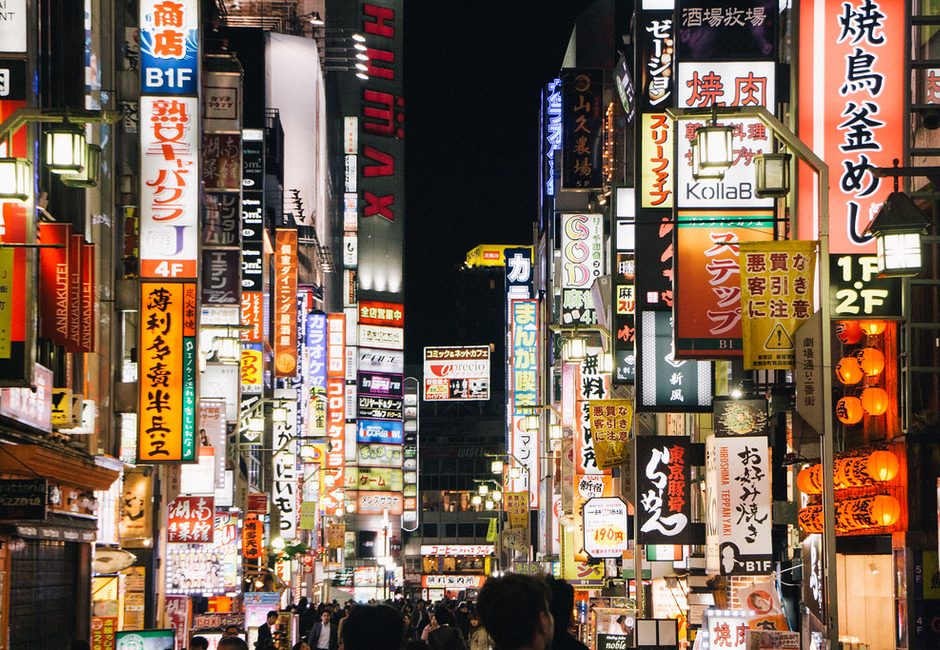
Seibu Shinjuku Line from Seibu-Shinjuku. Runs to Hon-Kawagoe, the station closest to the warehouse street, about a ten-minute walk away. Regular express trains take around an hour, and the reserved-seat Koedo limited express is quicker for a small surcharge. This is the better option from Shinjuku, though Seibu-Shinjuku station isn’t in the main JR Shinjuku complex. It’s a few minutes’ walk north of it, near Kabukicho.
JR from Shinjuku. Direct trains on the Saikyo line, which runs through onto the Kawagoe line, take about an hour. Only really useful if you’ve got a JR Pass.
From Kawagoe station (Tobu or JR), the historic district is a 15 to 20 minute walk north along Crea Mall, a covered shopping arcade. The Koedo loop bus runs from the station around the main sights, but it isn’t faster than walking once you count the waiting.
The route
The historic town runs roughly north from the stations, so the natural order is to walk up through the warehouse street, branch off to the candy alley, carry on to the shrine, then loop back south to Kitain before you return to the train. Allow four to five hours including lunch.
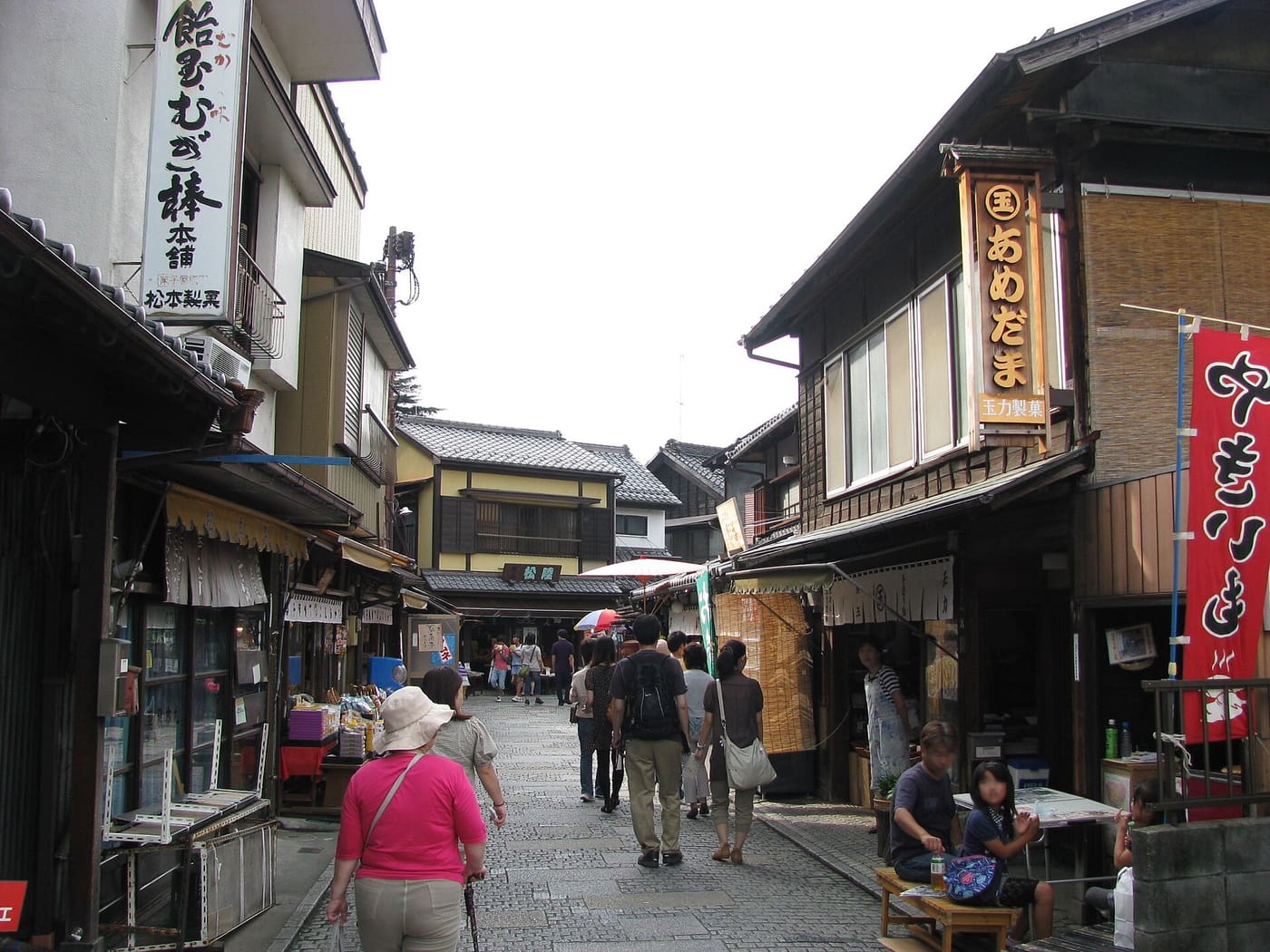
Kurazukuri Street (Ichibangai). The main event. In 1893 a fire destroyed a third of Kawagoe, and the merchants who rebuilt chose kurazukuri, the thick-walled clay storehouse style that had proven fireproof in Edo. A few dozen of those buildings survive along this street, dark plaster and heavy tiled roofs and enormous shutter doors, now housing sweet shops, craft stores and a small museum of the construction technique itself. Walk the full length once without stopping, then come back and go inside things. Start with the Kurazukuri Shiryokan museum, which shows the structure of one warehouse and explains why they survived when everything wooden around them burned.
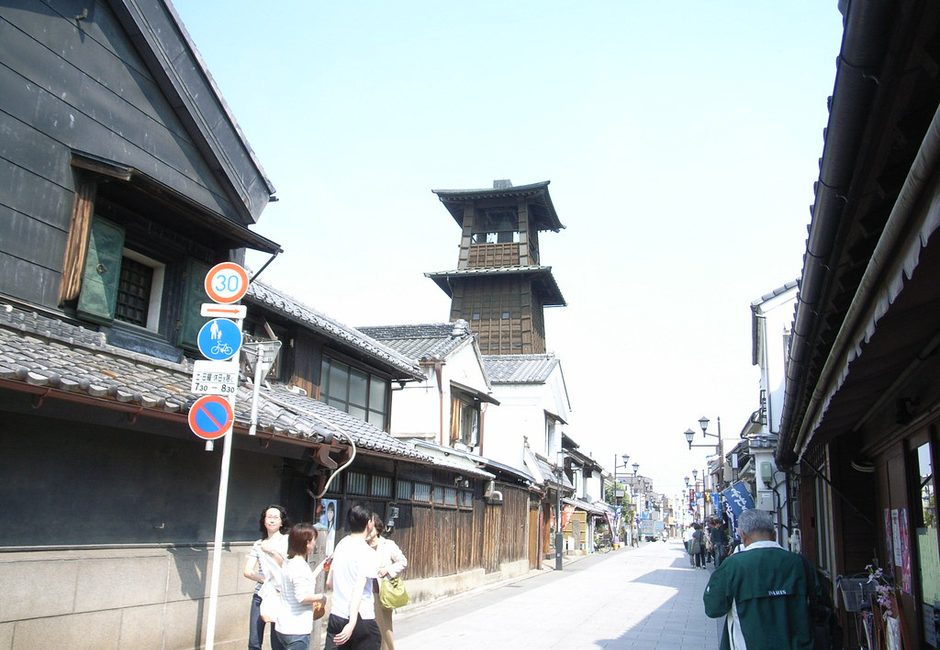
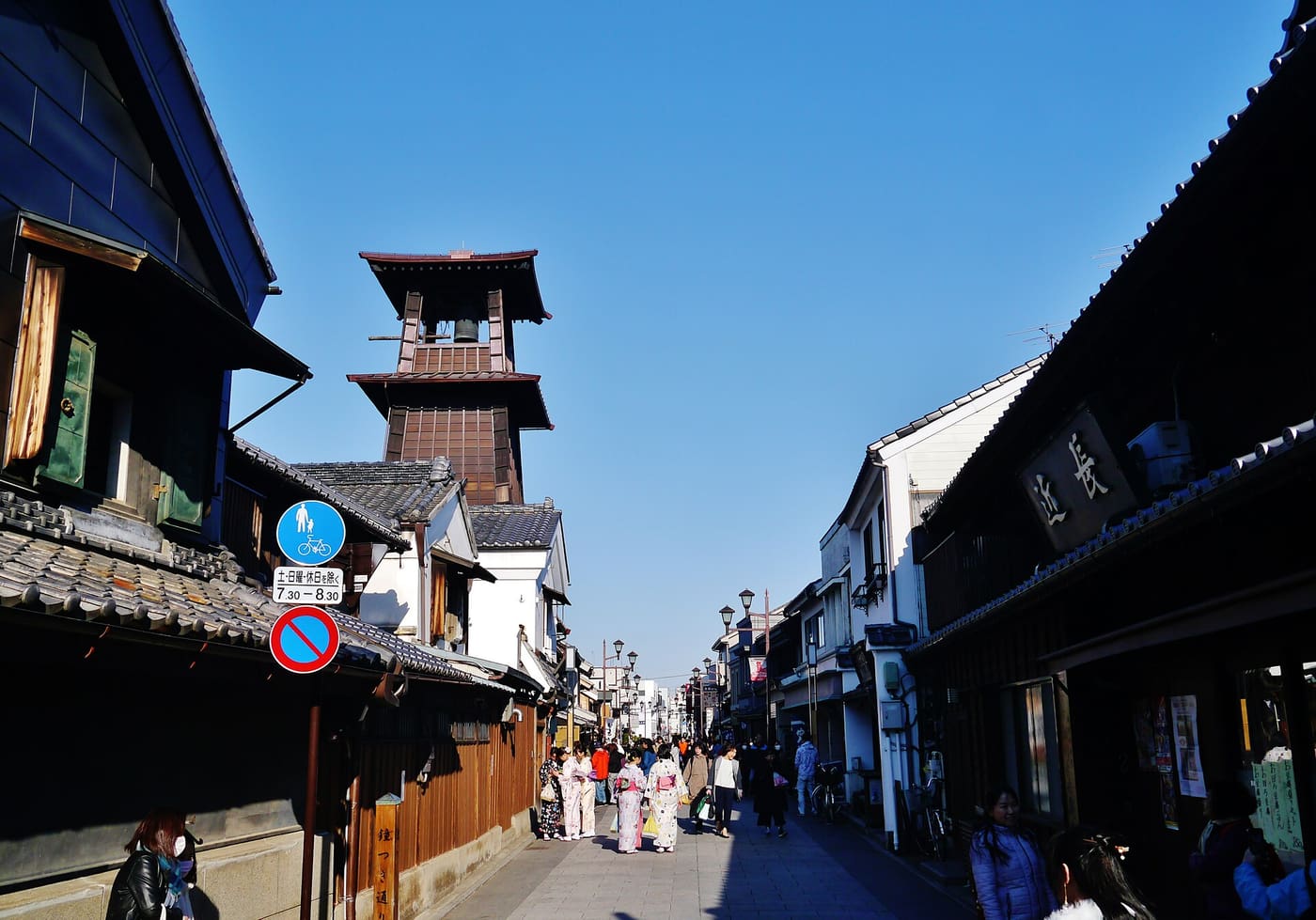
The Bell of Time (Toki no Kane). A wooden bell tower in a side street off Ichibangai, about 16 metres tall, rebuilt after that same fire on a spot where a bell has marked the hours since the early Edo period. It still rings four times a day, at 6am, noon, 3pm and 6pm, and the noon bell is the practical one to catch. It’s the town’s symbol and appears on everything, which doesn’t stop it being worth the two-minute detour.
Kashiya Yokocho (candy alley). A short cobbled lane a few minutes north-west of the bell, lined with around twenty shops selling old-fashioned dagashi. Penny sweets, hand-pulled candy, rice crackers, fu-gashi (puffed wheat gluten sticks glazed in brown sugar) and karinto. The alley grew in the Meiji period and boomed when Kawagoe’s sweet-makers supplied Tokyo after the 1923 earthquake. It’s small and popular, so it’s far better before 11am.
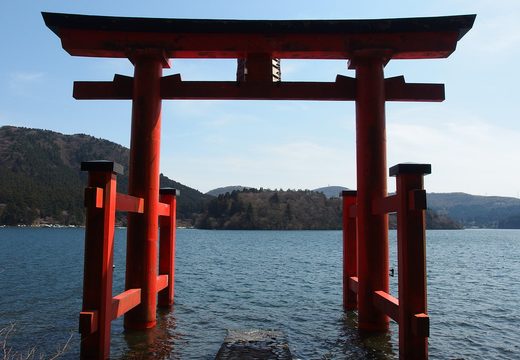
Kawagoe Hikawa Shrine. Ten to fifteen minutes’ walk north-east of the candy alley, through one of the tallest wooden torii in Japan at around 15 metres. The shrine specialises in enmusubi, matchmaking and relationships, and its fortunes come attached to paper sea bream that you fish out of a barrel with a tiny rod. From late June to early September (27 June to 6 September in 2026) the grounds hang around two thousand wind chimes along a corridor you walk through, lit until 8pm, and it’s one of the more photographed summer sights in the Kanto region.
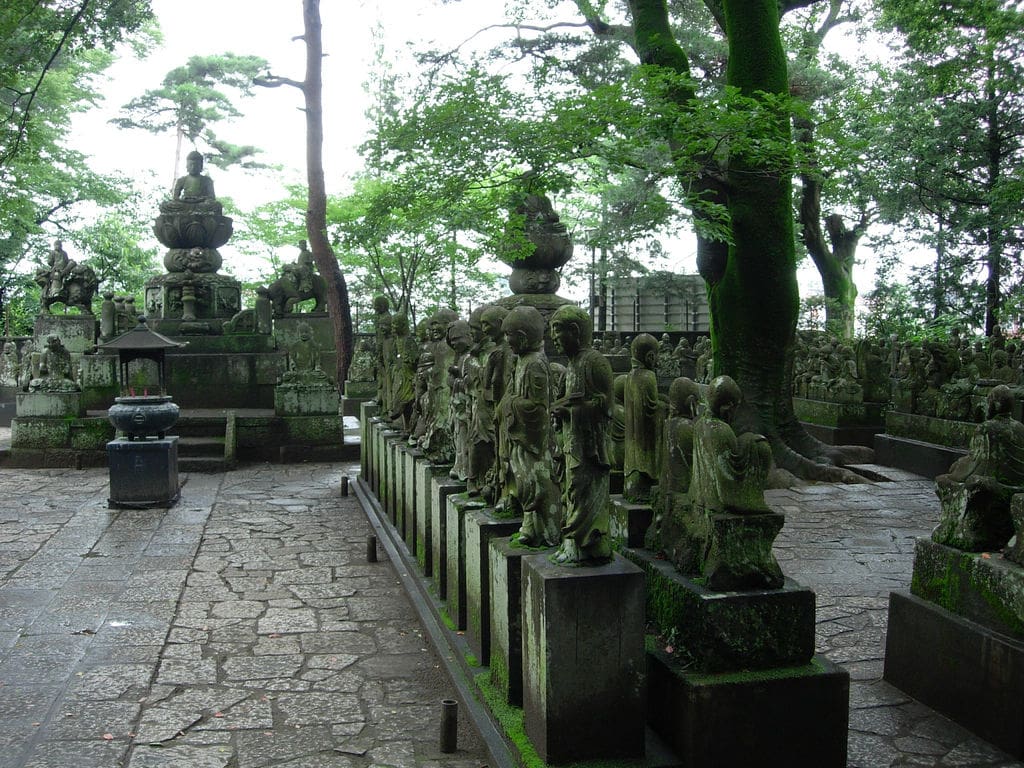
Kitain Temple. Head back south past the warehouse street, about 20 minutes on foot from the shrine, to the temple that earns Kawagoe its Little Edo credentials for real. In 1638 the shogun Iemitsu had several buildings dismantled at Edo Castle and shipped here to rebuild Kitain after a fire. The castle’s palace buildings are long gone, so these rooms, including the one said to be where Iemitsu was born, are the only surviving pieces of its residential quarters. Admission is a few hundred yen and includes the garden.
The other reason to come is the Gohyaku Rakan, the “500” rakan statues, which number over 530. They were carved between 1782 and 1825 and no two are alike. Some are laughing, some asleep, one is whispering to a neighbour, one has its face in its hands. Local lore says that if you touch the statues at night one will feel warm, and it will resemble a parent. Give the rakan a slow twenty minutes. They’re the single best thing in Kawagoe.
What to eat
Kawagoe’s food identity is sweet potato, full stop. The surrounding region grew it in volume from the Edo period, when Kawagoe potatoes sold in the capital as a treat, and the town has never let go. Along Ichibangai and the streets around it you’ll find sweet potato in every state of matter. Baked whole, as chips, as candied slices, as soft-serve ice cream, in dorayaki pancakes, in beer. The purple-tinted soft serve is the standard first purchase. The chips sold in paper cones are the thing to carry while you walk.
Coedo, the local brewery, makes a sweet potato ale called Beniaka that’s amber, slightly caramel and far better than the concept suggests. Shops on the main street sell it cold by the bottle, and there are taprooms in town if you want a proper glass.
For a sit-down lunch, unagi. Kawagoe has been an eel town since the Edo period, when the rivers that carried its goods to the capital also supplied the fish, and several eel houses trace their founding to the 1800s. Eel prices have climbed in recent years, so expect upwards of ¥4,000 for an unaju set (grilled eel over rice in a lacquered box), and queues at the well-known places from noon. Arriving by 11:30am solves that. If that’s too much, the soba and udon shops on the side streets are a reliable fallback.
When to go
Weekdays over weekends, without question. Kawagoe is close enough to Tokyo that half the city visits on a Saturday, and Ichibangai on a weekend afternoon is shoulder to shoulder, with the added hazard of buses squeezing down a street built for carts. On a Tuesday morning the same street is quiet enough to hear the shutters open. Go midweek and arrive before 10am.
Kawagoe Festival, the third weekend of October (17 and 18 October in 2026). The town’s big event, running since the 1600s, with towering wooden floats carrying musicians through the streets, and the hikkawase, when two floats meet at a crossroads and the bands duel until one side gives way. It joined UNESCO’s intangible cultural heritage list in 2016 and draws enormous crowds. Go if you want the spectacle and can accept that the calm merchant-town version won’t be available that weekend. Outside that weekend, October and November are excellent walking weather without the crush.
Summer for the wind chimes, with the caveat that the Kanto summer is hot and the warehouse street offers little shade. Morning again.
Kawagoe also earns its place as a rainy-day plan. Most of what you came for is a street and a temple, both fine under an umbrella, and the shops along Ichibangai are all indoors.
What to skip
The Koedo loop bus, unless mobility is an issue. The distances are short and the walk from the station isn’t complicated.
Crea Mall as a destination. It’s a normal covered shopping street with chain stores. Walk through it, don’t linger.
Combining Kawagoe with a second day trip. It’s tempting because Kawagoe is so quick, but nothing else on the day trip list sits on the same line. The right pairing is a morning in Kawagoe and an afternoon back in Tokyo, ideally on the same side of the city. Ikebukuro’s back streets, say, or on to Shinjuku.
Kimono rental on a weekend. The street gets busy enough that it becomes more queuing than strolling. Weekday mornings only.
Frequently Asked Questions
How far is Kawagoe from Tokyo?
About 30 minutes by express train on the Tobu Tojo Line from Ikebukuro, or roughly an hour from Shinjuku on the Seibu Shinjuku Line or JR. The fare is around ¥500 one way from Ikebukuro. The historic district is a 15 to 20 minute walk from Kawagoe station, or closer to ten minutes from Hon-Kawagoe on the Seibu line.
Is Kawagoe worth visiting?
Yes, on the right terms. It’s the easiest preserved Edo-era streetscape to reach from Tokyo, and the Kitain rakan statues and the rooms moved from Edo Castle are real historical sights rather than photo backdrops. It isn’t a big or dramatic destination, and if you have a full free day and clear weather you’ll get more from Kamakura or Hakone. For a half day, a rainy day, or a trip that can’t spare a full day, Kawagoe is the best option near the city.
How long do you need in Kawagoe?
Four to five hours covers the warehouse street, the candy alley, Hikawa Shrine, Kitain and a proper lunch at a relaxed pace. Three hours is enough for the street and Kitain alone. A full day is more than the town needs unless you’re here for the October festival.
What is the Kawagoe Festival?
A float festival held on the third weekend of October, dating back to the 1600s, in which elaborately carved floats topped with dolls are hauled through the streets by neighbourhood teams, with musicians playing on board. The highlight is the hikkawase, where floats face off at intersections after dark. It’s on UNESCO’s intangible cultural heritage list and is by far the busiest weekend of Kawagoe’s year.
Places in this guide
Photos show the actual places, licensed under Creative Commons and credited to their photographers.
Find hotels in Tokyo
Browse live availability and compare prices for your dates.
See hotels near Tokyo on Booking.comPrices are for the night of Saturday 24 October. You can change the dates on Booking.com. If you book, Roam Tokyo earns a small commission from Stay22 at no extra cost to you.