Mount Takao from Tokyo: The Easiest Mountain Day in Japan
Mount Takao from Tokyo: the Keio train from Shinjuku, which trail to take up and down, Yakuoin temple, Fuji from the summit, the beer garden, and when to go.
Places checked against official pages by Roam Tokyo, October 2026 How it's made
Mount Takao is a real mountain, 599 metres of cedar forest, temple steps and ridge trail, and it’s one train ride from Shinjuku with no transfers. That’s why it’s counted among the most-climbed mountains in the world, and why Tokyo residents treat it as a standing option rather than an expedition. A free Sunday, a clear morning, an afternoon that needs air. It’s pinned on the Tokyo travel map, and the place page for Mt Takao has the practical details at a glance.
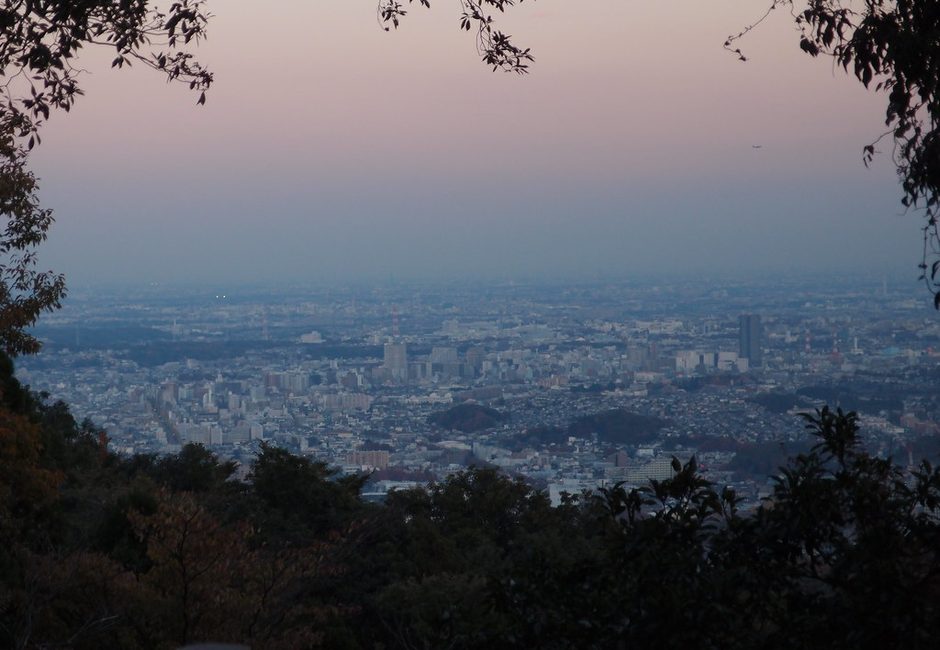
What you get out of it depends on the season. From late spring to late autumn a beer garden runs at the top of the cable car, with the Kanto plain spread out below the tables. In November the maples turn and the trails fill with the city’s koyo pilgrims. In winter, the clearest season, Mount Fuji sits sharp on the western horizon from the summit. It suits families, casual walkers, hikers who want a warm-up, and anyone whose plans for Hakone or Nikko just fell victim to a short itinerary.
Getting there from Tokyo
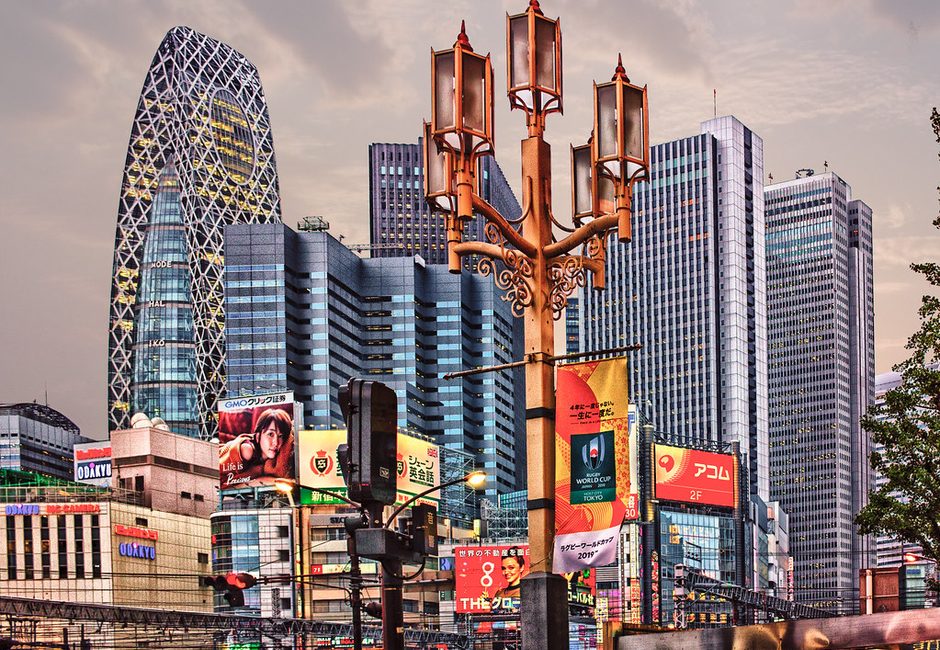
Keio Line from Shinjuku to Takaosanguchi. That’s the whole answer. Keio has its own terminal on the west side of Shinjuku station (not the JR platforms). Get on there and ride to Takaosanguchi, the end of the line. Look for the semi-special express, around 50 minutes with no change. Some services need a quick cross-platform switch at Kitano. You won’t miss it, the signage is obvious. The one-way fare is roughly ¥430, which for a mountain day is close to absurd.
Keio also sells a Mt Takao discount ticket (Takaosan kippu) that bundles the return train fare with a discounted cable car or chairlift ride, around ¥1,500 from Shinjuku with a return ride. It saves a few hundred yen against buying each piece separately, so pick it up at the ticket machines if you plan to ride up or down. Walking both ways? Just tap through with a Suica or Pasmo.
JR’s Takao station on the Chuo Line is one stop short and needs a change to Keio, so start on Keio and save yourself the trouble. From the cedar-clad Takaosanguchi station it’s a five-minute walk past the souvenir shops and soba houses to the base of the cable car, where every trail begins.
The route
Eight numbered trails and a few unnumbered ones cover the mountain. Three matter for a first visit, and the best day uses two of them, one up and a different one down.
Trail 1 (Omotesando), the main route. Paved the entire way, about 3.8 kilometres and 90 to 100 minutes from the base to the summit on foot. The lower section is the steepest and dullest part, a switchback road through the trees, and it’s exactly the section the cable car and chairlift skip. The cable car climbs at an angle steep enough to be counted the sharpest in Japan. The open-air chairlift runs alongside it and is the better ride in good weather. Either costs ¥490 one way and drops you at the upper station, roughly 470 metres up, from where Trail 1 continues past the monkey park and the Tako-sugi cedar with its tentacle roots into the temple grounds. This is the trail with the food stalls, the temple and the crowds.
Trail 6 (Biwa Falls), the stream route. Take this one up. It leaves from just left of the cable car base, follows a stream up a shaded valley, passes Biwa Falls (small, used by yamabushi ascetics for waterfall training, a two-minute detour) and finishes with a steep set of steps to the summit. About 3.3 kilometres and 90 minutes. It’s unpaved, wet in places and beautiful. Wear real shoes. Sandals won’t do. In peak koyo season the mountain sometimes makes Trail 6 one-way uphill to manage the crowds, so plan it as the ascent anyway.
Inariyama Trail, the ridge route. Starts from the same base area, climbs a ridge to the right of the valley and runs along the top with views back towards Tokyo every so often. Around 3.1 kilometres and 90 minutes, less shaded than Trail 6 and more open. A good descent, or the way up if you’d rather have views than water.
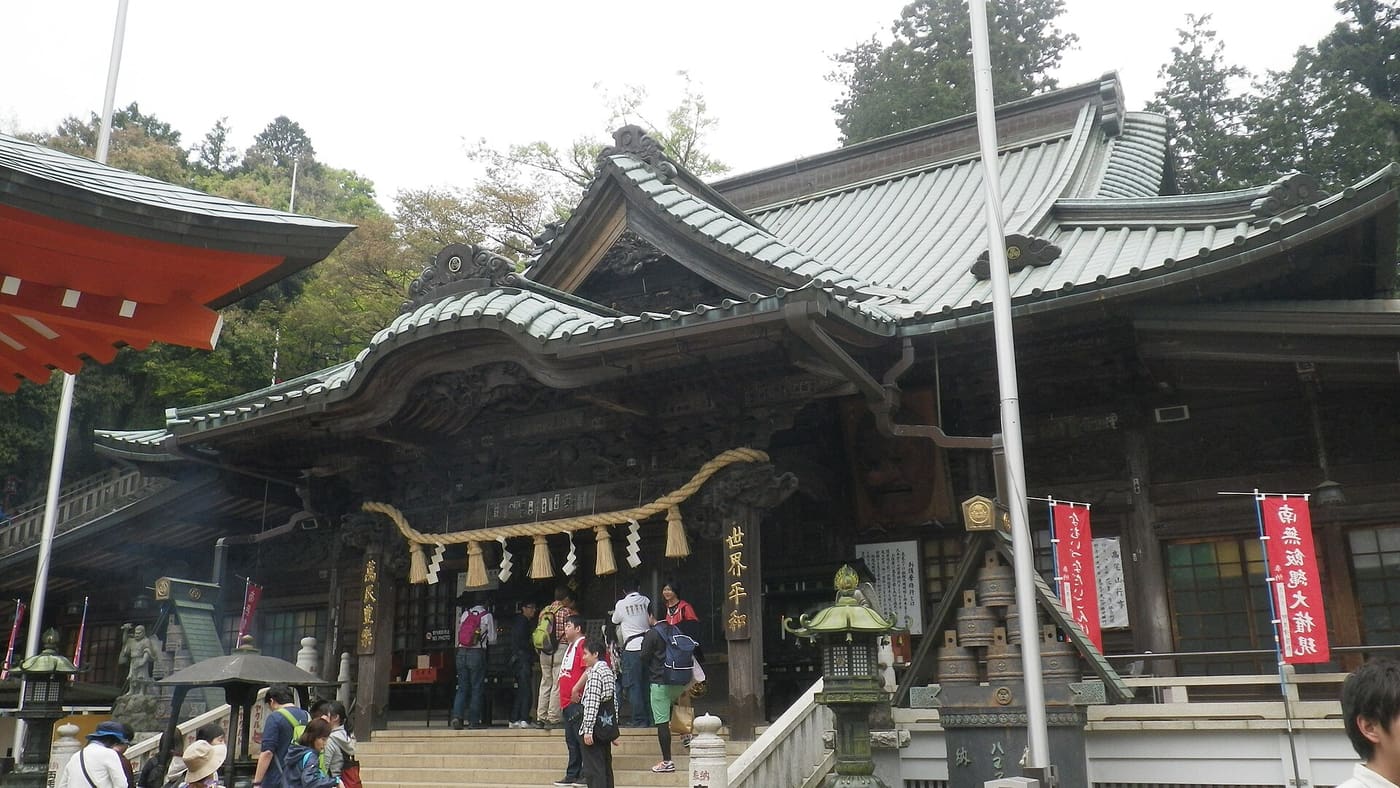
Yakuoin Temple. Whichever way you go up, come down Trail 1 so you pass through Yakuoin. It was founded in the 8th century and is a major Shingon temple today, and its identity is bound up with the tengu, the long-nosed mountain spirits whose statues guard the steps and appear on every amulet in the shop. Yamabushi ascetics still train here. The halls stacked up the slope and the ranks of red lanterns on the approach deserve a slow half hour rather than a walk-through. Just below the temple the path forks into Otoko-zaka (the men’s slope, 108 stone steps, one for each earthly desire in Buddhist counting) and Onna-zaka (the women’s slope, a gentle ramp). Take the steps up and the ramp down.
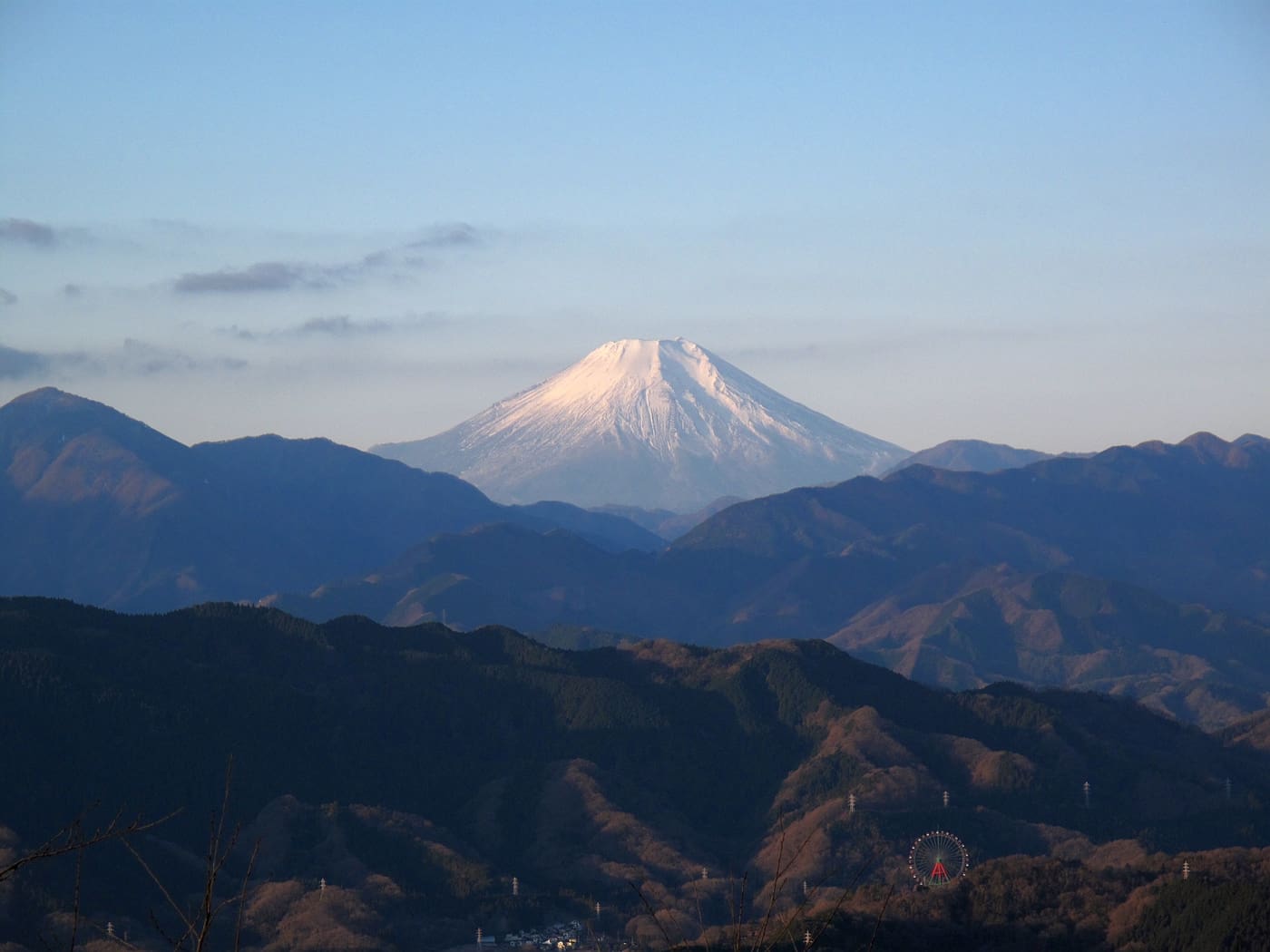
The summit. A broad flat top with benches, a visitor centre, a couple of noodle shops and an observation deck facing west. On a clear day Mount Fuji is right there, about 55 kilometres away, filling the gap between the Tanzawa hills. Clear days cluster in winter, from December through February, when the air is driest. In summer, haze usually swallows the view by mid-morning.
The beer garden (Takaosan Beer Mount). Beside the top cable car station, an open-air beer terrace runs an all-you-can-eat-and-drink format, two hours for ¥5,000 per adult in 2026. The main season ran from 30 May to 30 November this year, open from 1pm to 9pm, after a shorter daytime spring edition. The food is buffet standard. You’re there for the setting, a terrace at nearly 500 metres with the plain lighting up below as dusk falls, a cold beer in hand, and a breeze central Tokyo hasn’t felt since May. The Tokyo in summer guide puts it alongside the season’s other beer gardens. Expect a wait at peak times, and check the dates before you go, since they change each year.
The monkey park. On Trail 1 just above the cable car station, a small enclosure of Japanese macaques plus a wildflower garden, for a few hundred yen. Fine for young children, skippable for everyone else. Half an hour here is half an hour you’re not spending in the forest.
Going further. Strong walkers can continue west from the summit along a well-marked ridge to Mount Jinba, which turns Takao into a full hiking day. That’s a different trip, and it needs an early start and a map.
What to eat
Tororo soba, and nothing else comes close. Buckwheat noodles with a slick of grated mountain yam, the tororo, which is said to restore energy after the climb and certainly slides down easily. Shops serving it line the approach from the station, cluster around the cable car base, and turn up again along Trail 1 near the temple and at the summit. Expect ¥1,000 to ¥1,500 a bowl, hot or cold, and near-identical menus, so pick by queue length and view. The ones at the summit have the view. The ones at the base have shorter waits on the way down.
Along Trail 1 the stalls also sell dango, grilled rice dumplings glazed in soy or coated in walnut miso, which is the right thing to be holding while you look at Fuji. Yakuoin serves shojin ryori, Buddhist vegetarian cuisine, by reservation, and that’s the upgrade if you want to sit down to a real meal.
At the base, next to the station, the Keio Takaosan Onsen Gokurakuyu is a hot spring bath house built for exactly this purpose, a little over ¥1,000 to soak your legs before the train back. On a cold day it’s the best-spent hour of the trip.
When to go
Weekday mornings win, always. Takao is called Japan’s busiest mountain for a reason. On a fine weekend Trail 1 moves at a shuffle and the cable car queue can run to an hour. On a weekday, particularly before 9am, the same paths are nearly empty and the temple is quiet. Be on a Keio train by 8am if you can.
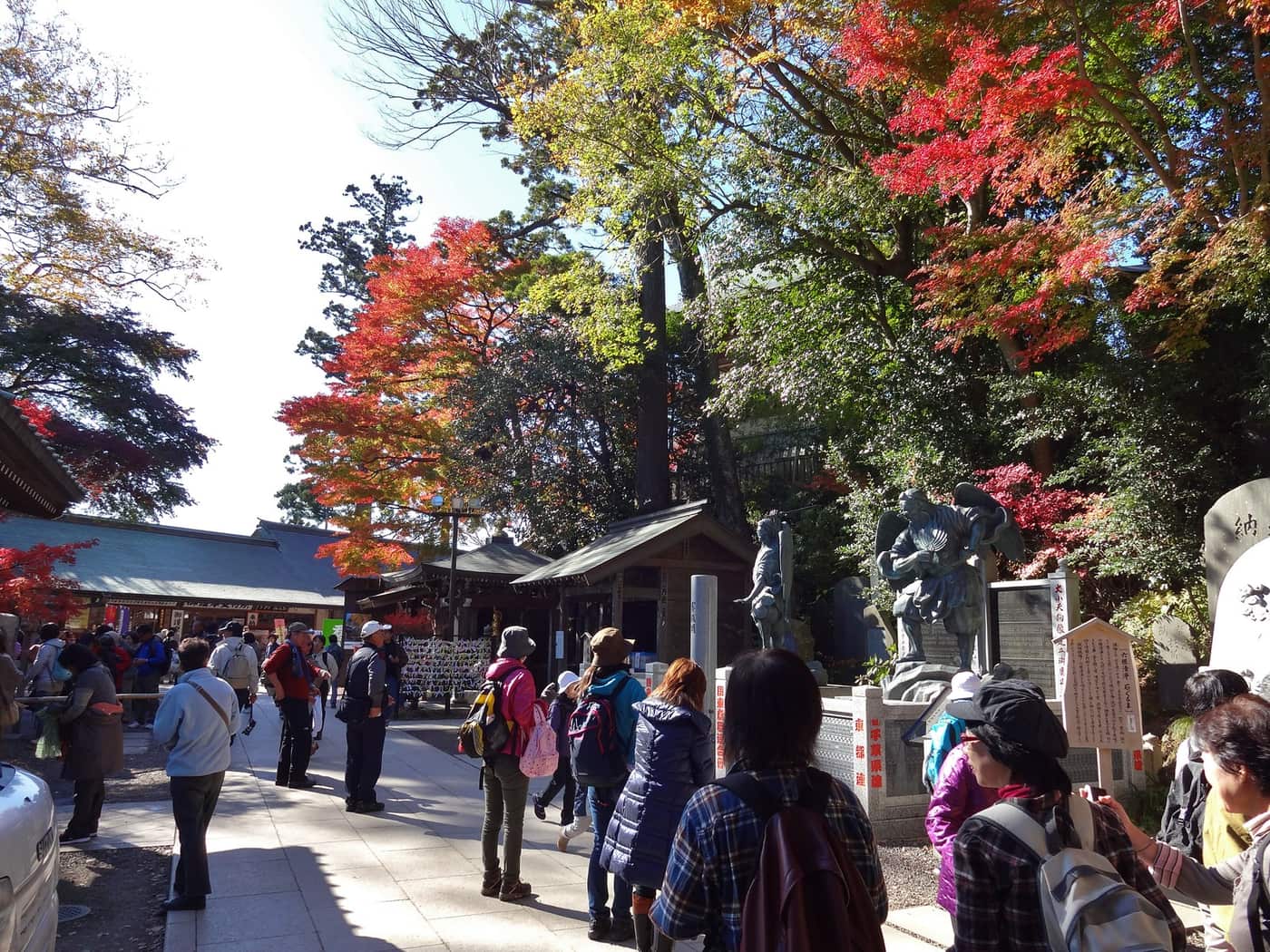
November for koyo. The maples around Yakuoin and the summit turn from around mid-November into early December, and the mountain holds a foliage festival for the month. It’s spectacular and it’s also the crush, the busiest weekends of the year, with cable car waits well over an hour and trail one-way rules in force. The Tokyo in autumn guide covers it alongside the city’s other foliage spots. Go on a weekday, arrive early and walk up Trail 6, and it’s one of the best days of the season. On a Saturday afternoon it’s a queue with trees.
Winter for Fuji. The clearest skies, the fewest people, and the summit view at its sharpest. It’s cold on top, so bring a layer, but the walk keeps you warm.
Summer for the shade and the beer garden. The trails are steamy in July and August, but Trail 6 stays cool under the canopy, and the beer garden at dusk is the reward. Start early and rest through the hottest hours.
What to skip
The cable car on the way up, on a quiet day. If you’re reasonably fit, the walk up Trail 6 is the best part of the mountain, and the cable car section of Trail 1 is the least interesting stretch. Save the ride for the descent if your knees want it.
The monkey park, unless you’ve got small children with you.
Trail 1 both ways. It’s the busy, paved, stall-lined route. Fine once, dull twice. Use a different trail for at least one direction.
Bolting Takao onto a Hakone or Fuji Five Lakes trip. It looks close on the map, but the connections aren’t easy. Takao is a half day from Shinjuku and back, and that’s its appeal.
Frequently Asked Questions
How hard is the Mount Takao hike?
Easy to moderate. Trail 1 is fully paved and manageable in ordinary trainers, and the cable car or chairlift removes the steepest section entirely. Trail 6 and the Inariyama Trail are unpaved with steep steps near the top and want proper walking shoes, but you don’t need experience or equipment for either. Most people reach the summit in 90 minutes or less, and active children manage it comfortably.
Can you see Mount Fuji from Mount Takao?
Yes, from the observation area at the summit on clear days, roughly 55 kilometres to the west-southwest. Visibility is best in winter, from December to February, and in the early morning. Summer haze often hides it by late morning, and cloud can hide it on any day. If Fuji is the reason you’re going, check the forecast the night before.
How long does Mount Takao take from Tokyo?
Plan a half day minimum. The Keio train from Shinjuku takes around 50 minutes each way, the climb is 60 to 100 minutes depending on the trail and whether you ride the cable car, and the descent is similar, plus time at the temple and the summit. Leave Shinjuku at 8am and most people are back in central Tokyo by mid-afternoon.
Is the Mount Takao cable car worth it?
On the way up, only if you want to skip the steepest and least scenic section of Trail 1, or if you have mobility concerns. On the way down it’s a pleasant rest for tired legs, and the chairlift especially has open views. On busy weekends and in November the queues can top an hour, and at that point walking is faster anyway.
Places in this guide
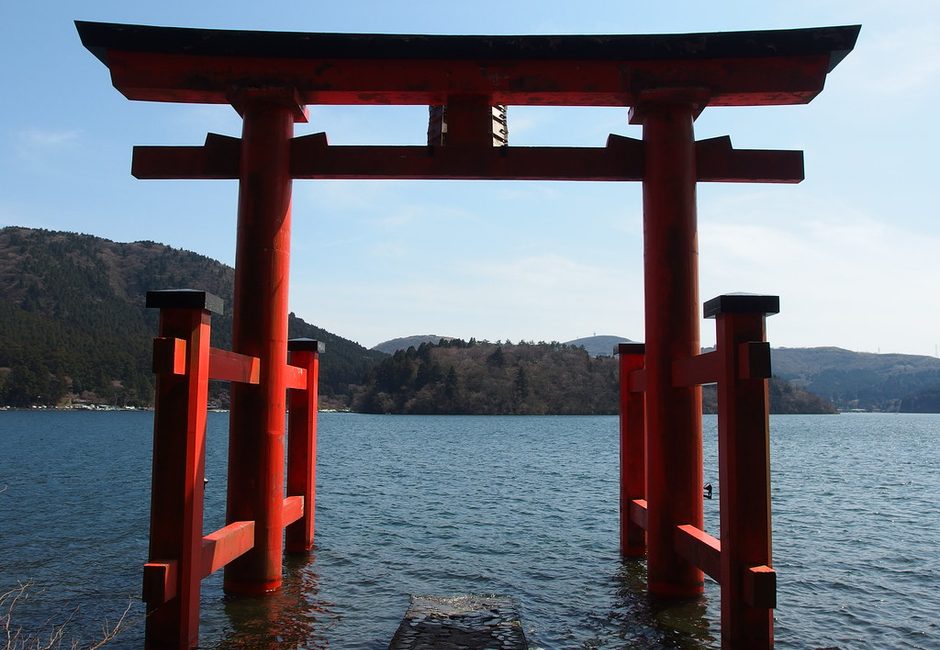
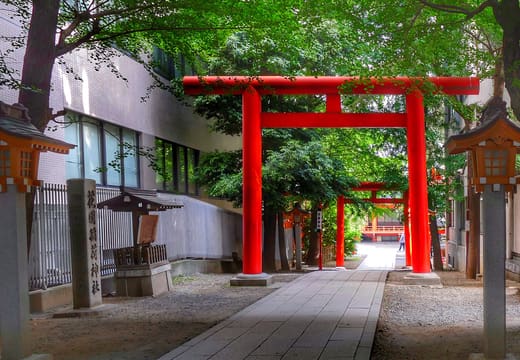
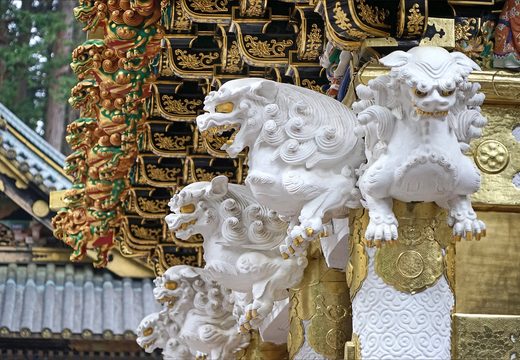
Photos show the actual places, licensed under Creative Commons and credited to their photographers.
Find hotels in Tokyo
Browse live availability and compare prices for your dates.
See hotels near Tokyo on Booking.comPrices are for the night of Saturday 24 October. You can change the dates on Booking.com. If you book, Roam Tokyo earns a small commission from Stay22 at no extra cost to you.