Hakone Day Trip from Tokyo: The Loop, Fuji Views, Staying Over
The Hakone loop in the right direction for Fuji views, the Romancecar and Hakone Free Pass explained, black eggs at Owakudani, and why one night beats a day.
Places checked against official pages by Roam Tokyo, October 2026 How it's made
Hakone is the day trip that behaves like a holiday. Ninety minutes south-west of Shinjuku, a volcanic caldera holds a chain of small towns strung along a mountain railway, a steaming valley of sulphur vents, a crater lake with Mount Fuji rising behind it, and more hot spring inns than anywhere else near Tokyo. The famous loop links all of it with five different vehicles in a single circuit, so the day is as much about the transport as the sights. It suits anyone who wants mountains and open air after a week of city, families (the loop is a small child’s dream), and anyone drawn to an onsen. The one thing it can’t promise is Fuji, which depends on the weather and the season. The day trips from Tokyo guide compares Hakone with Kamakura and Nikko. This page goes deep on the loop. Which direction gives Fuji the best chance, what the pass covers, and why a night in a ryokan here is the best upgrade you can make to a Tokyo trip.
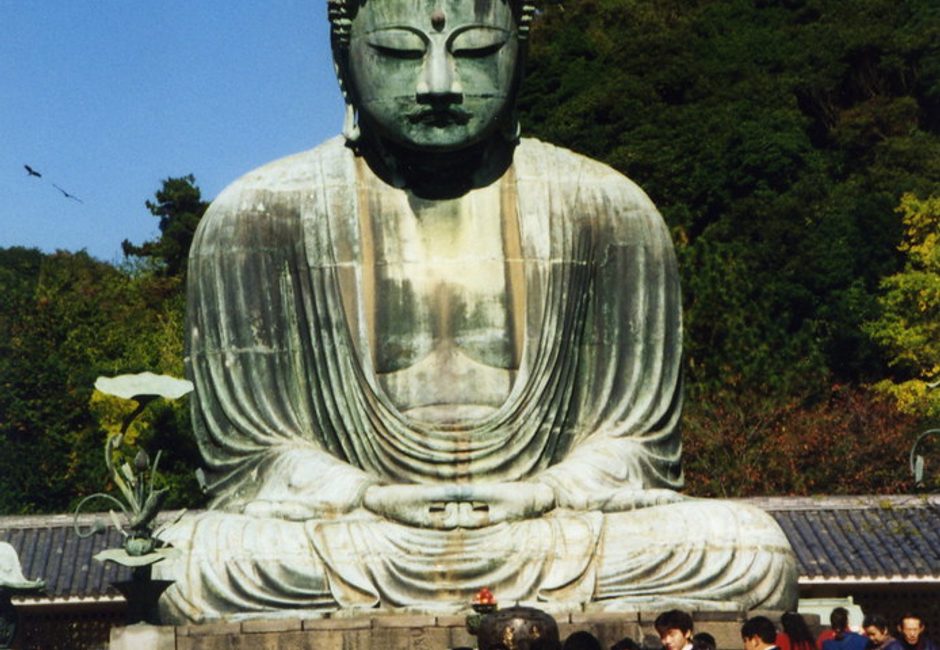
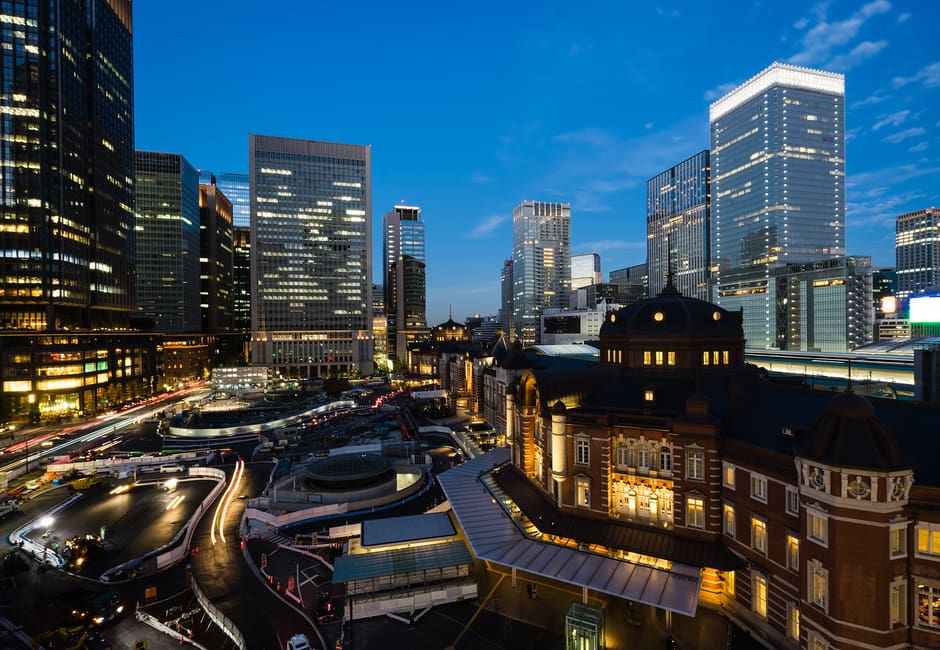
Hakone is pinned on the Tokyo travel map, and the Hakone place page has the practical fields at a glance.
Getting there from Tokyo
Odakyu Romancecar from Shinjuku. The Romancecar is Odakyu’s limited express, all reserved seats, running from Shinjuku direct to Hakone-Yumoto in about 85 minutes. The base fare plus the seat surcharge comes to roughly ¥2,500 one way. Some services on the newest trains have observation seats at the front with a full-width window, and they’re the first to sell out. Book online or at the Odakyu counters at Shinjuku a few days ahead if you’re going on a weekend. If you don’t have a reservation, the regular Odakyu express reaches Odawara in about 90 minutes for the base fare only, with a change to the Hakone Tozan train for the last 15 minutes to Yumoto.
The Hakone Free Pass. Sold by Odakyu at Shinjuku and online, it covers the Odakyu return fare from Shinjuku plus unlimited rides on everything in the loop. That’s the Hakone Tozan railway, the cable car, the ropeway, the sightseeing boats on Lake Ashi and the Hakone Tozan buses, with discounts at many museums, gardens and day-use baths. Prices rose in October 2025. It’s now ¥7,100 for two days from Shinjuku, ¥7,500 for three, and ¥6,000 for two days from Odawara if you’re arriving by shinkansen. The Romancecar seat surcharge (around ¥1,200 each way) is extra. Pay it. Bought individually, the full loop plus the trains from Shinjuku comes to roughly the price of the pass, so on a single day it’s close to break-even, and what you’re really buying is never queuing for a ticket at any of the five changes. Over two days, or with extra bus rides, it pulls ahead.
JR alternative. With a JR Pass, take the Tokaido Shinkansen from Tokyo Station to Odawara (35 to 40 minutes, on the Hikari and Kodama services that stop there), then buy the Odawara version of the Free Pass and change to the Hakone Tozan line. If you don’t have a JR Pass, the Romancecar is cheaper and simpler.
When to leave. Take a Romancecar between 7 and 7:30am and you’ll be in Hakone-Yumoto by 9am. Two reasons. Fuji is clearest in the morning, and on most days of the year cloud builds over it through the afternoon. And the Tozan railway platform at Yumoto develops a queue on weekend mornings that can pass 45 minutes by ten o’clock, which the route below avoids entirely.
The route
Most people ride the loop clockwise. Tozan railway up, cable car, ropeway, boat, bus back. This route runs it the other way. The lake and the ropeway, which are the two Fuji viewpoints, come first while the sky is clearest, and the railway, which has no view you’d queue for, comes at the end when the crowds have moved on.
9am, bus to Moto-Hakone. Walk out of Hakone-Yumoto station past the shops to the bus stops and take the Hakone Tozan bus bound for Moto-Hakone and Hakone-machi (routes are lettered on the sign, and the pass covers all of them). It climbs the old Tokaido highway route for 35 to 40 minutes, and you’ll be at the lakeshore around 9:45am.
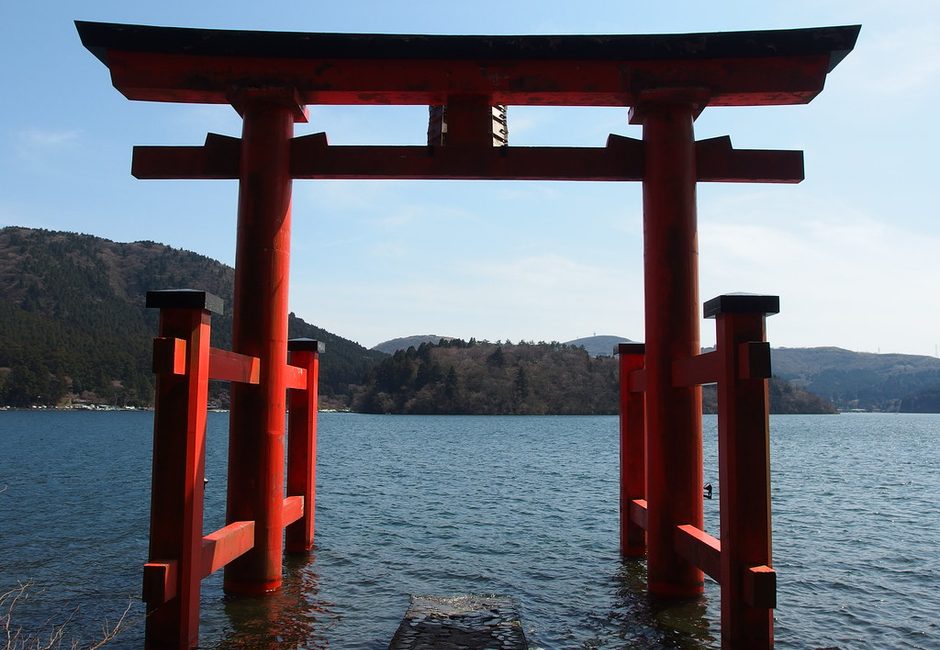
9:45am, Hakone Shrine. Ten minutes on foot along the water from the Moto-Hakone pier, Hakone Shrine sits in cedar forest on the lake’s edge, and its red torii standing in the water is the most photographed object in Hakone. Early is the only time you’ll see it without a queue of people waiting their turn under the gate. By 10:30am the line can be half an hour. Climb the stone steps to the main shrine, then return along the lakeshore. If you’ve got time, the avenue of 400-year-old cedars between Moto-Hakone and Hakone-machi is a five-minute detour, and the reconstructed Hakone Checkpoint (a few hundred yen), where the shogunate inspected travellers on the Tokaido road, is beside it.
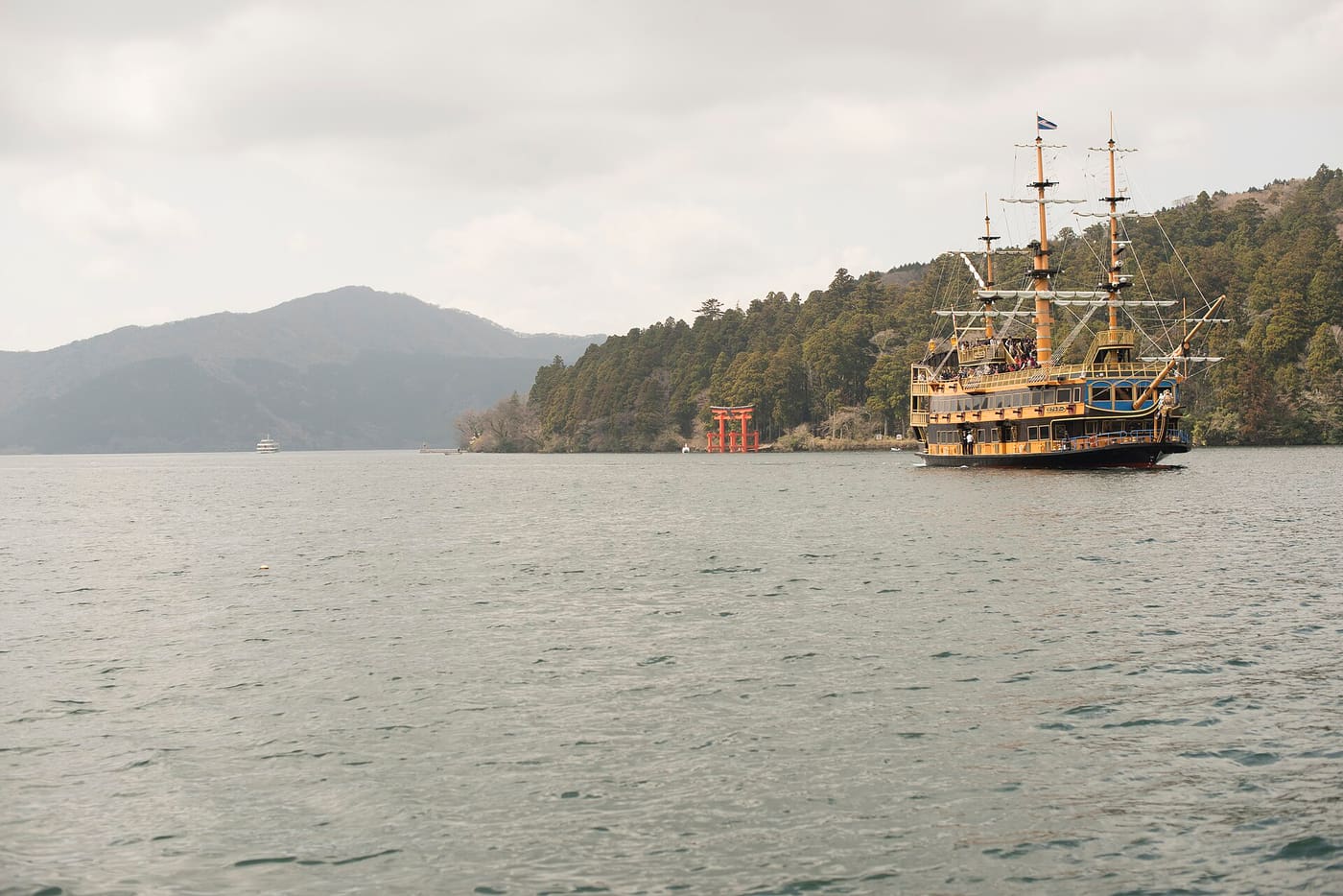
10:45am, the pirate ship. Hakone Sightseeing Cruise runs galleons across Lake Ashi from Moto-Hakone and Hakone-machi to Togendai at the north end, taking roughly 25 to 40 minutes depending on the pier. They’re absurd. Ride one anyway, and stand on the top deck at the bow. On a clear day Fuji sits above the ridge behind the north-west shore, and the view from the water is the best single view of the day.
11:30am, ropeway to Owakudani. From Togendai the Hakone Ropeway climbs to Owakudani in about 15 minutes, cresting the ridge to the smell of sulphur and, with luck, Fuji filling the window behind you. Owakudani is the caldera’s active valley. Yellow-crusted fumaroles, hissing steam, bare hillside where the gas has killed the trees. There’s a short viewpoint path, a visitor centre, and shops selling the black eggs described below. Forty-five minutes is enough. The ropeway occasionally closes when volcanic gas levels rise, in which case replacement buses run and the pass covers them.
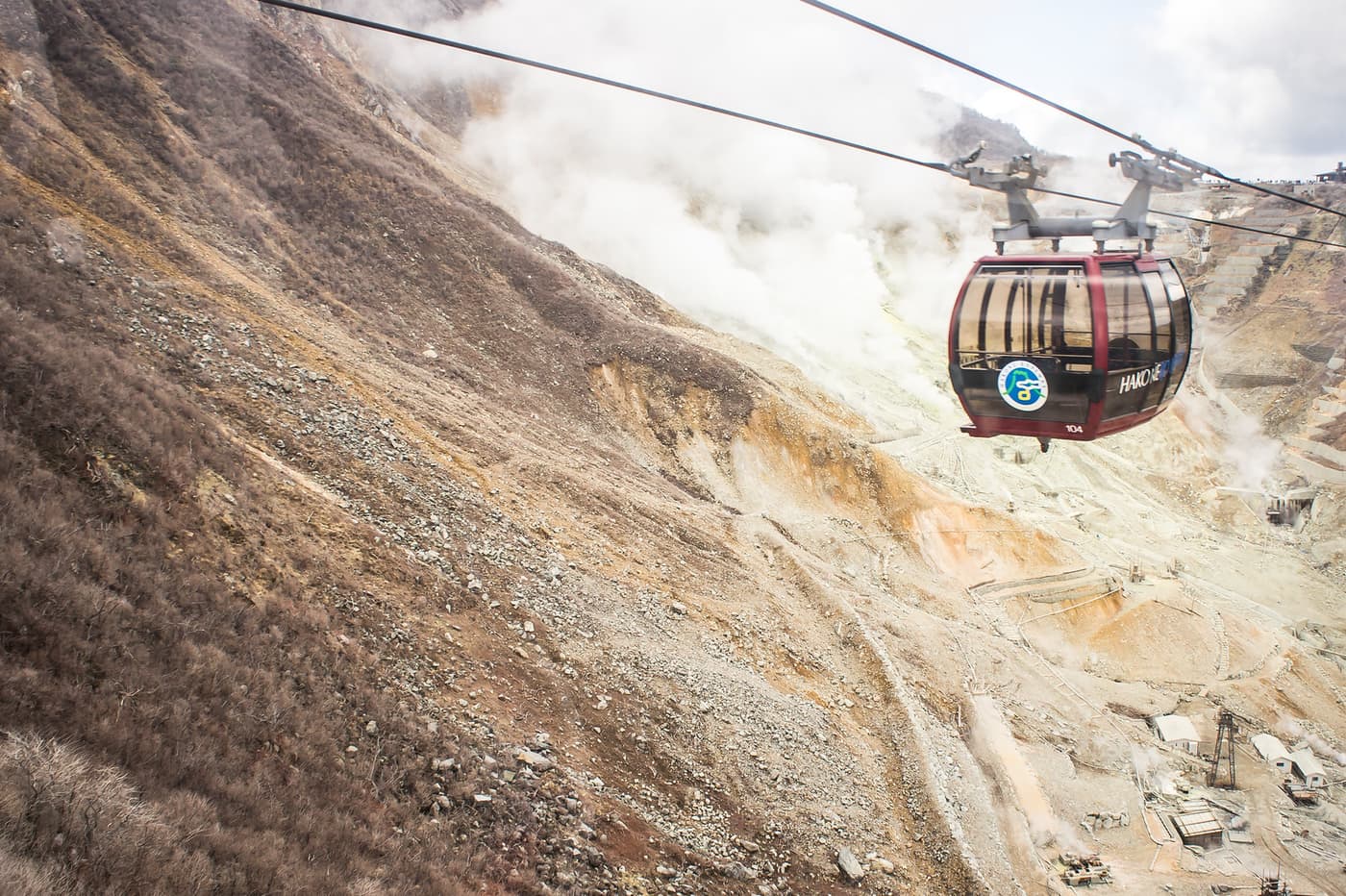
12:45pm, down to Gora. The ropeway continues from Owakudani to Sounzan in under ten minutes, where the funicular cable car drops to Gora in another ten. Gora is the loop’s hill town and the best place for a proper lunch, with soba, tofu and set-menu places along the steep streets around the station.
2pm, Hakone Open-Air Museum. One stop down the Tozan railway from Gora (or a ten-minute walk downhill), the Open-Air Museum spreads sculptures across a hillside garden with the mountains behind. Henry Moore bronzes in a meadow, a stained-glass tower with a spiral staircase you climb from the inside, a pavilion holding a large Picasso collection, and a hot spring foot bath at the bottom where the socks come off. Entry is ¥2,000 at the gate (¥1,800 online), less with the pass discount. Give it ninety minutes. Children rate it higher than any other stop on the loop.
3:45pm, the Tozan railway down. From Chokoku-no-Mori station, the Hakone Tozan railway descends to Yumoto in about 35 to 40 minutes, reversing direction at three switchbacks as the driver and conductor swap ends. It’s one of the steepest conventional railways in Japan, opened in 1919, and in late June and July the cuttings are lined with hydrangeas.
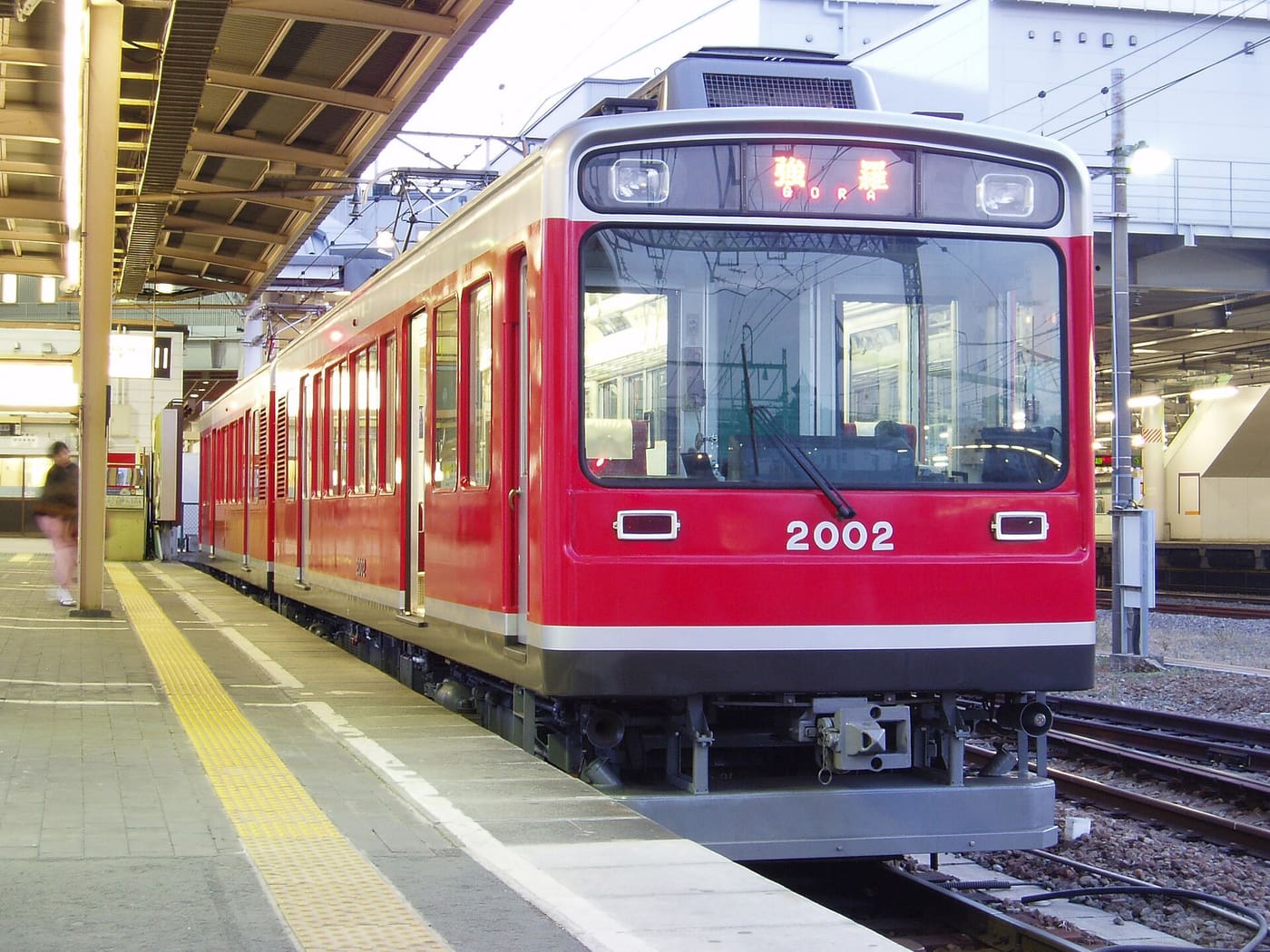
4:30pm, onsen at Hakone-Yumoto. The town at the bottom is the oldest hot spring resort in Hakone and its shopping street is the place for souvenirs. Several inns and public baths take day visitors for roughly ¥1,000 to ¥2,000. Tenzan, a wooded bathhouse a five-minute bus ride upstream (¥1,450, open until 11pm), is the most atmospheric. An hour in the water is the right way to end your loop. A Romancecar around 6:30pm has you in Shinjuku by 8pm.
What to eat
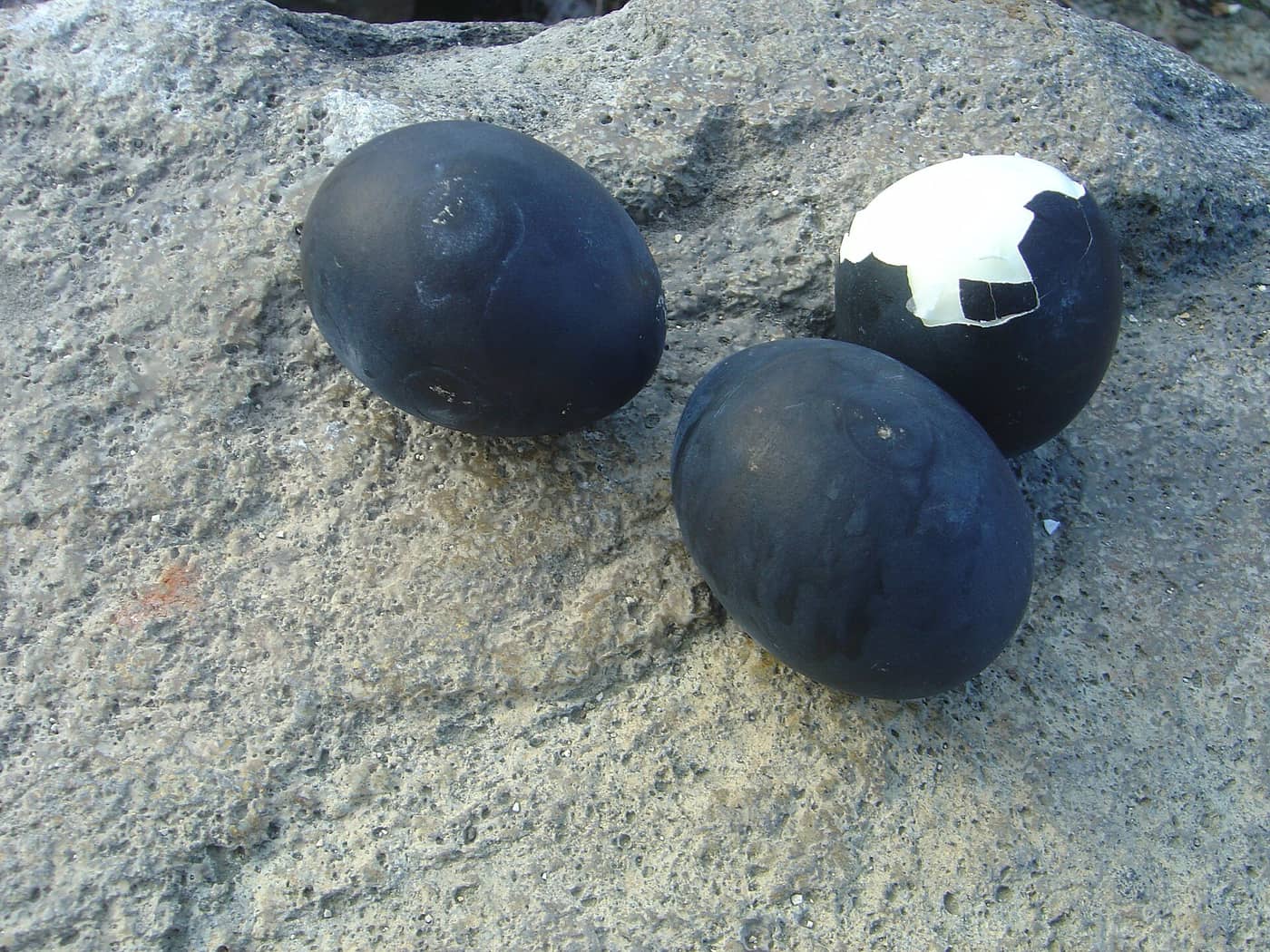
The famous one is kuro-tamago, the black eggs of Owakudani. Ordinary eggs are boiled in the sulphurous hot spring pools on the hillside, where a reaction with the water turns the shells black while the inside stays a normal egg. They’re sold four to a bag for ¥500, and local lore holds that each one adds seven years to your life. Eat one on the viewpoint path with the steam behind you. Don’t plan on taking more than a couple home.
On the lake, the Moto-Hakone restaurants serve wakasagi, the small smelt caught in Lake Ashi, deep-fried whole as tempura. Order it with a beer after the shrine. Hakone-Yumoto’s speciality is manju, small steamed buns with sweet bean paste, sold hot from shopfront steamers along the main street and eaten while you walk. If your bus between Yumoto and the lake takes the old Tokaido route, it passes Amazake-chaya, a thatched teahouse that has served amazake (a sweet, unfiltered rice drink) and grilled mochi to travellers on the highway since the Edo period. It’s a reason to get off and take the next bus. If you pass through Odawara, try its kamaboko, the steamed fish cake the town is known for.
What to skip
Yunessun on a day trip. It’s the hot spring water park near Gora, with coffee, sake and wine baths, and it’s well advertised and popular with children. It also swallows three hours, and on a day trip those hours come out of the Open-Air Museum or the lake. Save it for an overnight stay, when your second day has room for it.
The timing trap is running the loop clockwise on a weekend. Riding the Tozan railway up from Yumoto first, as most people do, means joining the longest queue of the day at the moment it’s longest, then arriving at the ropeway and the lake in the early afternoon when the cloud has closed over Fuji. Run the loop in reverse as above and both problems disappear. On Golden Week and November weekends every leg has a queue whichever way you go. A weekday is a different experience.
Should you stay overnight?
Here the answer is different from Kamakura and Nikko. Stay if you possibly can. The loop as a day trip is a long circuit of transfers with the best part, the onsen, squeezed in at the end before a train. A night in a ryokan in Gora, Miyanoshita, Sengokuhara or beside the lake turns it into what it should be. The loop split across two unhurried days, a kaiseki dinner served in your room, the outdoor bath under the stars and again at dawn, and a second chance at Fuji in the clearest hour of the morning. The two-day Free Pass already covers the transport, so the only extra cost is the room, and Hakone has ryokan at every price point. The ryokan guide explains what to expect and how to book, and the Fujiya Hotel in Miyanoshita, a wooden Western-style hotel from 1878, is the alternative if you’d like the history without sleeping on a futon. A spare night on a Tokyo trip is better spent here than on one more night in the city, and the 7-day itinerary shows where a night away fits.
Frequently Asked Questions
Can you see Mount Fuji from Hakone?
Yes, on clear days, from the ropeway between Owakudani and Togendai, from the boat on Lake Ashi, and from the shore at Moto-Hakone. Visibility is best from late autumn through winter, when the air is dry, and in the morning before cloud builds. Summer is the least reliable season, and on overcast days the mountain doesn’t appear at all. Check the forecast the night before, and if Fuji is the reason you’re going, swap the day for a clearer one.
Is the Hakone Free Pass worth it?
For most visitors, yes. On a single day that rides the full loop from Shinjuku, the pass (¥7,100) costs about the same as buying each leg separately and saves you the ticket queue at every transfer. On an overnight trip, or with extra bus rides, it comes out ahead. It doesn’t include the Romancecar seat surcharge, which you pay separately and which is still worth it for the direct train.
How long is the train from Tokyo to Hakone?
It’s about 85 minutes on the Odakyu Romancecar from Shinjuku to Hakone-Yumoto, direct with reserved seats. The regular Odakyu express takes around 90 minutes to Odawara plus a 15-minute change to reach Yumoto. With a JR Pass, the shinkansen from Tokyo Station to Odawara takes 35 to 40 minutes, with the same Tozan line connection.
Is one day enough for Hakone?
One day covers the loop, a shrine, the sculpture museum and an hour in a hot spring, provided your train leaves Shinjuku by 7:30am and you run the loop in the direction described above. It’s a full day and a good one. A night in a ryokan is better, because it puts the onsen at the centre of the visit rather than at the end, and the two-day pass is priced for it. If a single day is all your trip allows and Fuji matters most, go in winter and go early.
Places in this guide
Photos show the actual places, licensed under Creative Commons and credited to their photographers.
Find hotels in Tokyo
Browse live availability and compare prices for your dates.
See hotels near Tokyo on Booking.comPrices are for the night of Saturday 24 October. You can change the dates on Booking.com. If you book, Roam Tokyo earns a small commission from Stay22 at no extra cost to you.