Kamakura Day Trip from Tokyo: Route, Trains, and What to Skip
A Kamakura day trip planned hour by hour: the JR line down, Zen temples at Kita-Kamakura, the Great Buddha, Hase-dera, shirasu for lunch, and the Enoden to Enoshima.
Ask a Tokyo resident which day trip to do first and the answer is Kamakura. The reason is how much fits into a few square kilometres: a 13th-century bronze Buddha sitting in the open air, a string of Zen temples climbing wooded hillsides, a ridge trail above the town, a working beach, and a two-carriage tram that runs so close to the houses along the coast you could reach out and touch the laundry. Kamakura was the seat of Japan’s first shogunate from the 1180s, which is why a small seaside town holds this much serious history, and it’s an hour from central Tokyo on an ordinary commuter train. There’s no pass to plan, nothing to book, and no mountain weather to gamble on. It suits first-time visitors best, and anyone whose trip has room for one day out of the city but not two. That’s why it’s the day-trip pick in the 7-day Tokyo itinerary, and this guide is the full version of that day. Trains, a route that runs from morning to late afternoon, what to eat, and what to leave out.
Kamakura is pinned on the Tokyo travel map with the other day trips, and the Kamakura place page has the practical fields at a glance. Wondering how it compares with Nikko and Hakone? The day trips from Tokyo guide weighs all three.
Getting there from Tokyo
You’ve got two rail options, and both work. Which one to use depends on where you’re staying and where you want the day to end.
JR Yokosuka line. From Tokyo Station, the Yokosuka line runs direct to Kamakura in about 55 to 60 minutes, calling at Shinagawa on the way (roughly 50 minutes from there). From the west side, the JR Shonan-Shinjuku line leaves Shinjuku and Shibuya and joins the same tracks south of Yokohama. Most of its services run through to Kamakura in about an hour, and the ones that don’t mean a simple cross-platform change at Ofuna. Fares are roughly ¥1,000 each way on an IC card since JR East’s March 2026 fare rise. There’s no reservation and no pass. Just tap in.
Get off one stop early at Kita-Kamakura. The temples there are the most atmospheric in town, and starting there means the route below runs in one direction with no backtracking.
Odakyu plus the Enoden. From Shinjuku, the Odakyu line runs to Fujisawa in about an hour, and the Enoden tram takes over for the coastal stretch through Enoshima and Hase to Kamakura. It’s the slower way in at roughly 90 minutes, but Odakyu sells the Enoshima-Kamakura Freepass (¥1,640 from Shinjuku), which covers the return Odakyu fare and unlimited Enoden rides for the day. It makes sense if you’re planning to finish at Enoshima and ride Odakyu home from there, which is what this route does.
The combination most people settle on is JR down to Kita-Kamakura in the morning, an Enoden day pass (called Noriorikun, ¥800) bought at Kamakura or Hase station for the coastal legs, and Odakyu back to Shinjuku from Katase-Enoshima at the end. Everything except the Enoden pass works on an IC card, and the Enoden takes IC cards too if you’d rather not bother with the pass.
When to leave. Be on a train by 8am. Kotoku-in opens at 8am, the Kita-Kamakura temples shortly after, and the town changes character around 10:30am when the day-trippers land. On a weekday in spring or autumn a 9am arrival still buys you an hour of quiet. On a weekend in cherry blossom or hydrangea season it doesn’t, so leave earlier or pick a different day.
The route
This runs from the northern temples over the ridge to the Buddha, then along the coast by tram. You do the hilly walking while your legs are fresh and end with the sea. You’ll walk around seven kilometres in total, with one climb that’s steep but short.
9am, Kita-Kamakura and the Zen temples. Engaku-ji sits right beside the platform, its grounds climbing a wooded valley past a thatched relic hall and the largest temple bell in Kamakura (entry ¥500). Ten minutes south along the road is Kencho-ji, founded in 1253 and the oldest Zen training monastery in Japan (also around ¥500). The juniper trees in its main courtyard are said to have grown from seeds the founding Chinese abbot brought with him. Forty minutes at each is enough. If two temples before lunch sounds like one too many, do Engaku-ji and walk past Kencho-ji.
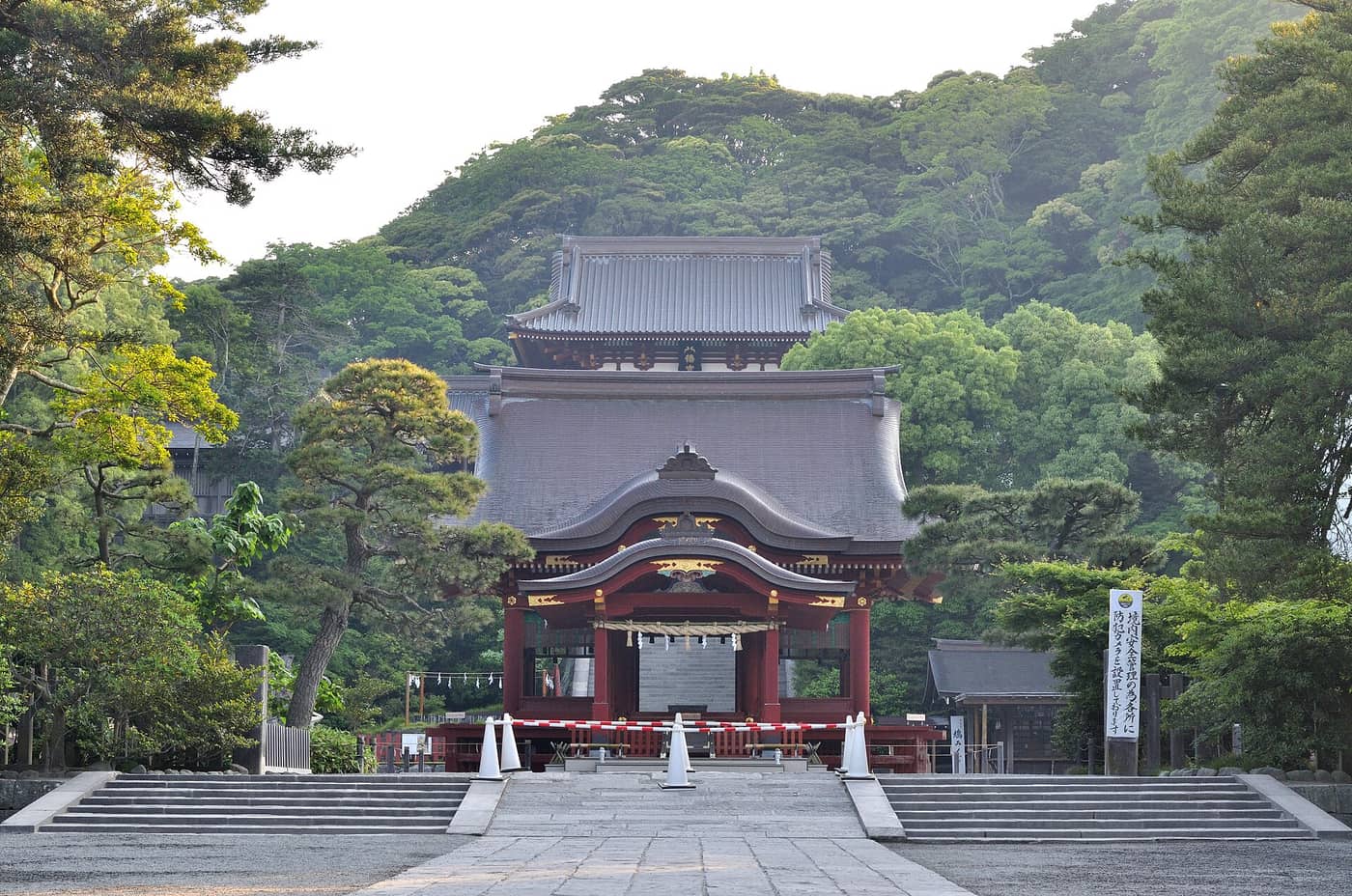
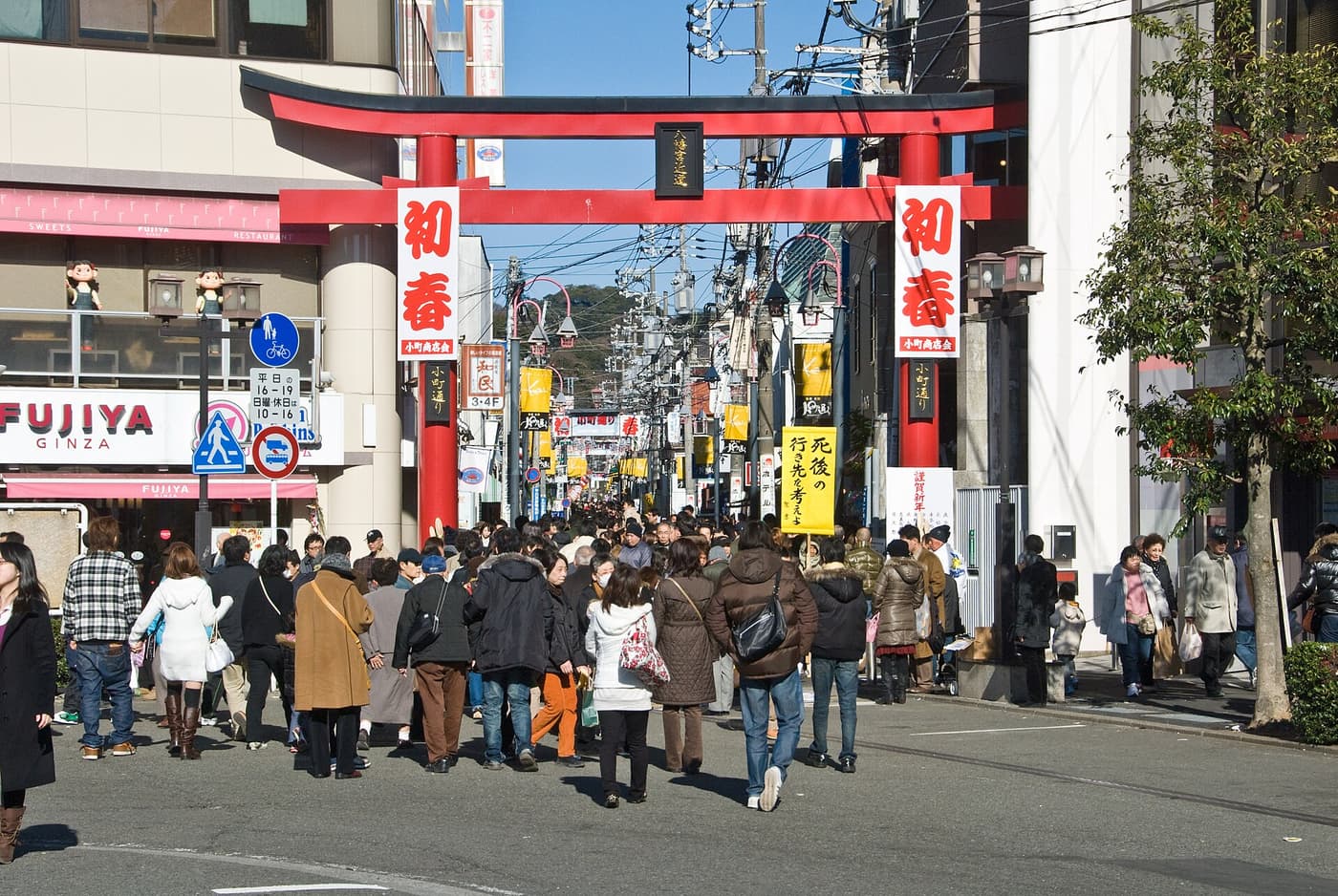
10:30am, Tsurugaoka Hachimangu. Keep walking south and the road brings you to the back of Tsurugaoka Hachimangu, the shrine Minamoto no Yoritomo moved here in 1180 to anchor his new capital. Its main hall stands at the top of a broad stone staircase looking straight down the Dankazura, a raised, cherry-lined causeway that points along Wakamiya-oji avenue to the sea. The grounds are free and you’ll want about 30 minutes. Walk down through the great torii and into Komachi-dori, the parallel shopping street, while it’s still only half awake. This is the moment to see it. By mid-afternoon it’s shoulder to shoulder.
11:15am, the Daibutsu hiking trail. From Kamakura station’s west exit, a 20-minute walk through quiet residential streets brings you to Zeniarai Benten, a shrine you enter through a tunnel in the rock, where visitors wash their coins in a spring water cave in the belief that the money will multiply. Just above it, Genjiyama Park is where you join the Daibutsu hiking course, the ridge trail that runs roughly three kilometres through the woods to the Great Buddha. It’s a proper dirt path with tree roots and a few steep pitches, but nothing that needs more than trainers, and it takes an hour to 90 minutes at an easy pace, dropping you close to Kotoku-in. Check its status before you go. The course has had long closures after typhoon damage, including one reported from late 2025. If it’s shut, walk back to Kamakura station and ride the Enoden three stops to Hase, which puts you at the Buddha in under 20 minutes.
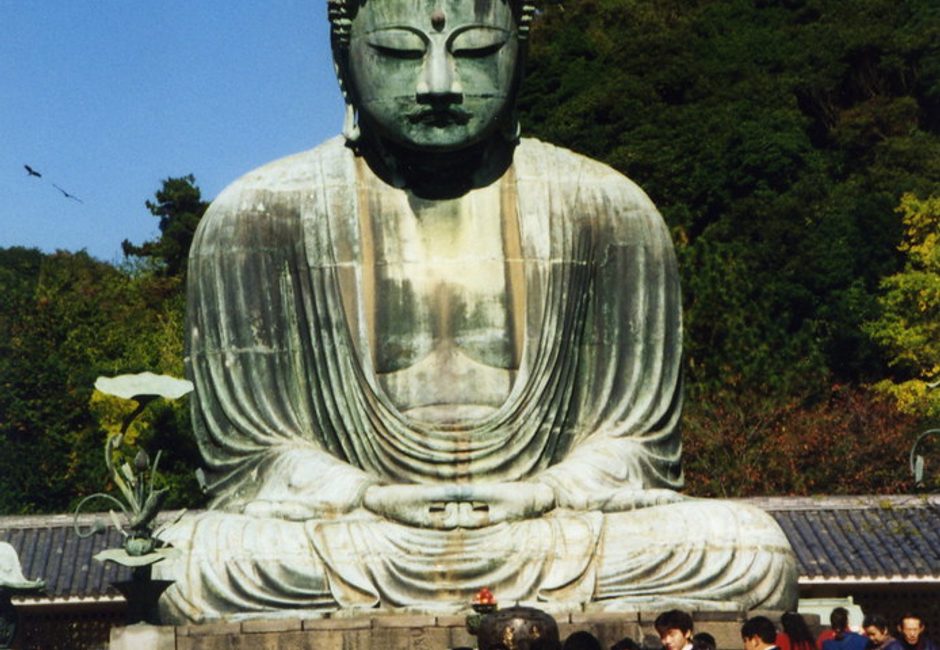
12:45pm, Kotoku-in and the Great Buddha. The Daibutsu has sat in the open since a tsunami swept away its hall in the late 15th century, and it’s much better for it. Cast in bronze in 1252, it stands over 11 metres tall on its base, and its face is calmer than a statue this famous has any right to be. Entry is ¥300, and when the interior is open a small extra fee lets you step inside the hollow statue to see the joins. Half an hour is right, longer if the light is good.
1:15pm, lunch in Hase. The ten-minute walk down from Kotoku-in to Hase station is the best stretch of the day for eating. The food section below has the details. Order a shirasu rice bowl.
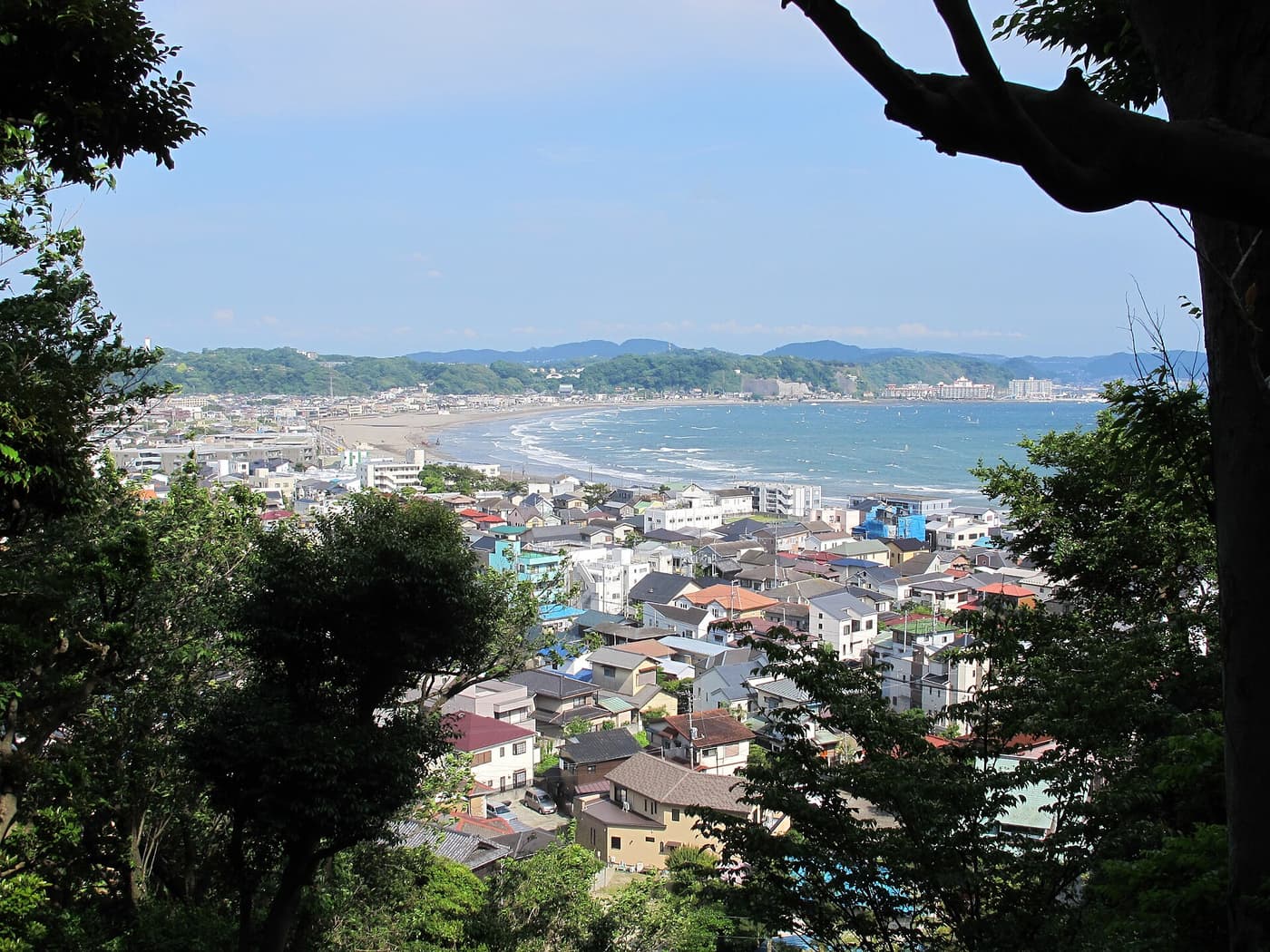
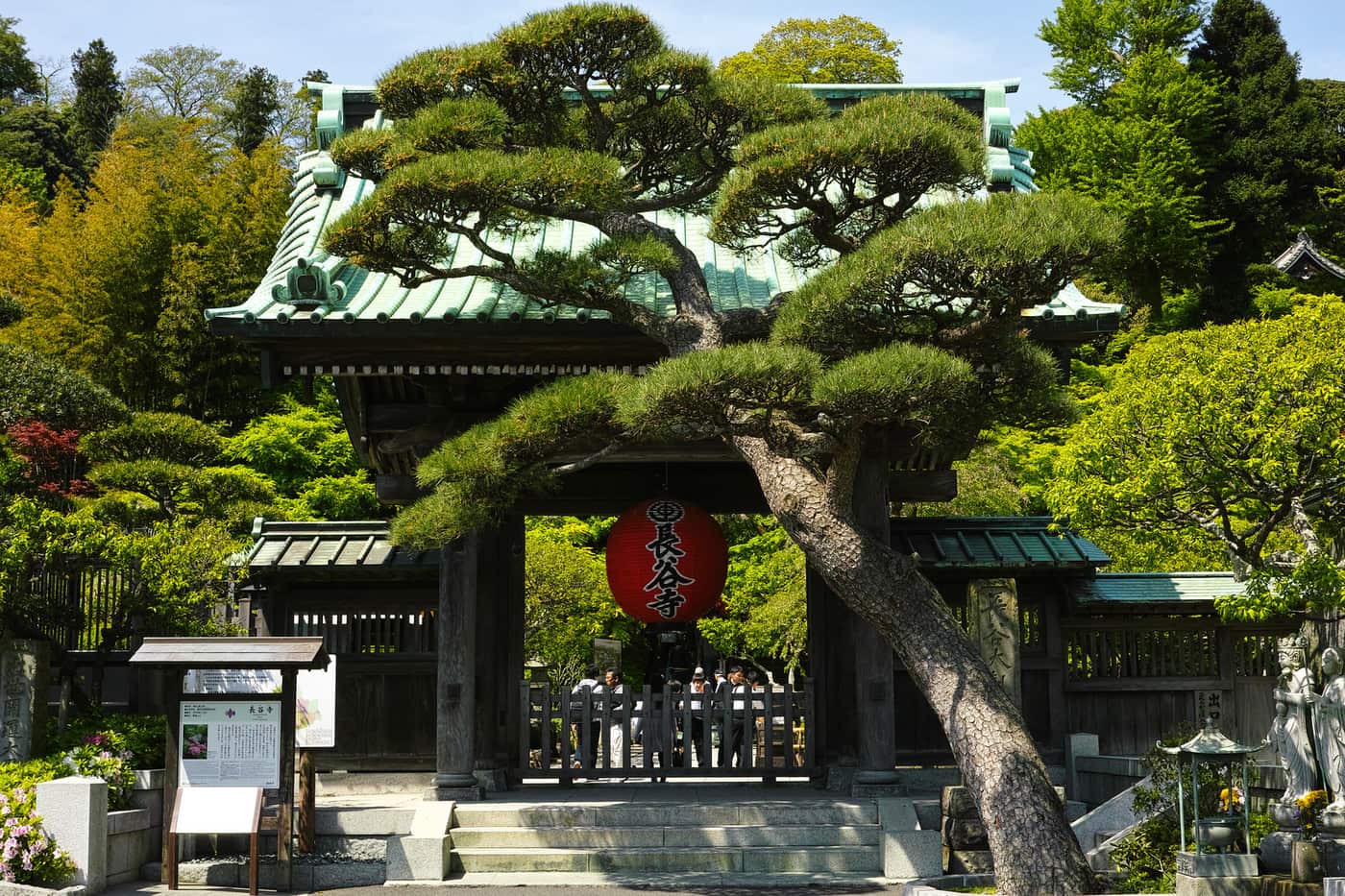
2pm, Hase-dera. Two minutes from the station, Hase-dera climbs a hillside in stages. A garden and pond at the bottom, a hall holding a nine-metre gilded wooden statue of the eleven-headed Kannon halfway up, and a terrace at the top with the best view in Kamakura, the whole bay curving away toward Zushi. There’s also a small cave shrine lit by candles, and rows of tiny Jizo statues placed by parents in memory of lost children. Entry is ¥400, and 45 minutes is plenty. In June the hydrangea path is the reason you’ll queue.
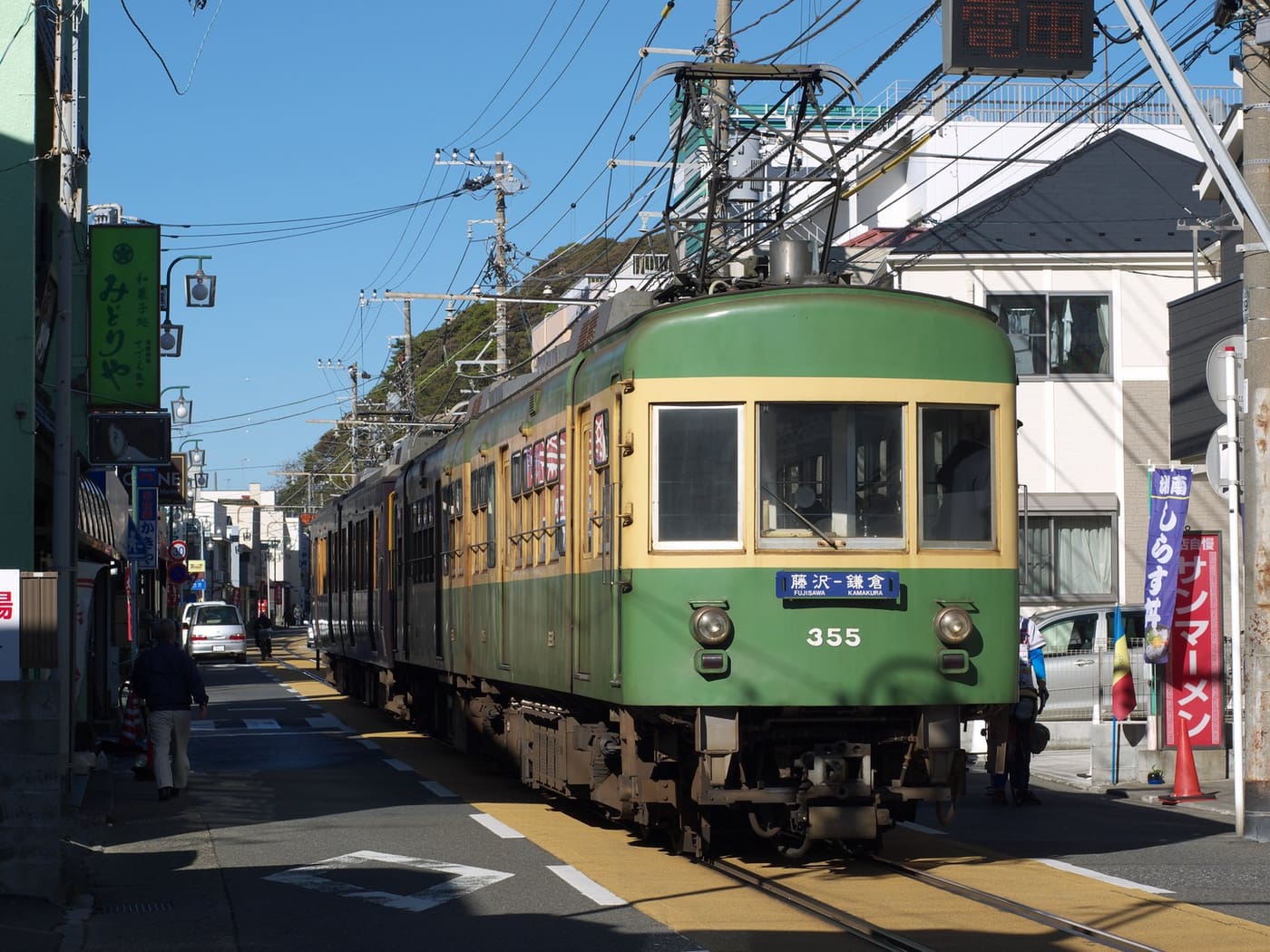
3pm, the Enoden to Enoshima. Board the Enoden at Hase heading west. Within two stops the tram breaks out onto the coast at Inamuragasaki and runs along the sea wall, past the level crossing at Kamakurakokomae station and a view you may know from the anime Slam Dunk. The run to Enoshima takes about 15 minutes. Get off, cross the causeway to the island, and spend the rest of the afternoon climbing through the shrine gates to the top. On a clear winter afternoon you’ll see Fuji across the bay to the west, and sunset from the far side of the island is the way to finish. Katase-Enoshima station, ten minutes back across the bridge, has Odakyu trains to Shinjuku in about 70 minutes.
What to eat
Shirasu is the point. These are tiny whitebait landed in Sagami Bay, served either kama-age (briefly boiled, soft and faintly sweet) or nama (raw, translucent, and only on the menu when the boats went out that morning). The classic order is shirasu-don, a bowl of rice piled with one or both, a raw egg yolk, grated ginger and soy. The best shops cluster between Hase station and Yuigahama beach, most serve lunch only, and a short queue outside a place with a handwritten sign is the signal you want. One catch. Sagami Bay’s shirasu fishery closes from January until around mid-March each year, so raw shirasu is off the menu in winter and you’ll only get the frozen or boiled kind.
Komachi-dori runs on snacks rather than meals. Purple sweet potato soft serve, croquettes, senbei crackers pressed while you wait. For a souvenir, Toshimaya’s hato sabure, the pigeon-shaped butter biscuits in the yellow tin, have been baked in Kamakura since the 1890s and are what Tokyo residents bring back. On Enoshima, the approach street to the shrine sells tako senbei, a whole small octopus pressed flat between hot plates into a giant cracker, which is more fun than it sounds. Kamakura Beer is the local craft brewery if you’d like a beer on the beach.
What to skip
Komachi-dori in the afternoon. It’s a pleasant 400 metres of shops at 9am and a slow-moving crowd by 2pm. See it in the morning on the way to the shrine and don’t go back.
Hokoku-ji on a one-day visit. The bamboo grove temple on the east side of town is beautiful and much photographed, but it’s on a bus route in the opposite direction from everything else here. Adding it costs you about 90 minutes of round trip and pushes Hase-dera or Enoshima out of the day. Save it for a second visit, when the Kita-Kamakura temples and Hokoku-ji can share a day of their own focused on the east side.
The timing trap is hydrangea season. Kamakura is famous for hydrangeas in June, and on June weekends Meigetsu-in and Hase-dera turn into ticketed queues, sometimes an hour long. The flowers are lovely. Standing in line for an hour to see them isn’t. Go on a weekday, or accept that the temples will be mostly people.
Should you stay overnight?
A day is all you need. Kamakura’s evening is short. Most shops on Komachi-dori close by 6pm, the temples shut around 5pm, and there aren’t many hotels of note. The exceptions are surfers and anyone who wants the beach at dawn, who’ll find guesthouses around Yuigahama and Shichirigahama. Everyone else should ride the Odakyu back to Shinjuku and sleep in Tokyo. If what you want is a night away from the city, Hakone is where it pays off, and the ryokan guide explains how to book one.
Frequently Asked Questions
How long is the train from Tokyo to Kamakura?
It’s about an hour. The JR Yokosuka line from Tokyo Station takes roughly 55 to 60 minutes direct, and the JR Shonan-Shinjuku line from Shinjuku or Shibuya takes about the same, occasionally with a change at Ofuna. The Odakyu route via Fujisawa and the Enoden tram is closer to 90 minutes. Fares on JR are roughly ¥1,000 each way with an IC card.
Is Kamakura worth a day trip from Tokyo?
Yes, and for most visitors it’s the best first day trip. No destination near Tokyo packs more variety into a smaller area. Temples, a hiking trail, a famous statue, a beach and a coastal tram, all within an hour of the city with no special pass required. Nikko has grander architecture and Hakone has mountains and hot springs, but both take longer to reach and both reward an earlier start and more planning.
Can you do Kamakura and Enoshima in one day?
Yes, and it’s the combination to aim for. The Enoden tram links them, about 15 minutes from Hase to Enoshima. The route above does the temples and the Buddha in the morning and early afternoon, then rides out to Enoshima for the late afternoon and sunset, and returns to Shinjuku on the Odakyu line from Katase-Enoshima. Expect a long day of around ten hours door to door.
Do I need a JR Pass or a special pass for Kamakura?
No. An IC card covers the JR journey from Tokyo, and the Enoden accepts IC cards as well. Two passes are optional and useful to know about. The Enoden day pass (¥800) pays off if you ride the tram three or more times, and the Odakyu Enoshima-Kamakura Freepass (¥1,640 from Shinjuku) bundles the Odakyu return with unlimited Enoden rides if you’re travelling from the Shinjuku side and ending at Enoshima. A JR Pass would cover the JR leg but isn’t worth buying for this trip alone.
Places in this guide
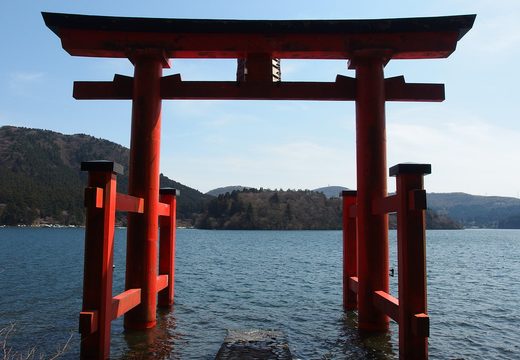
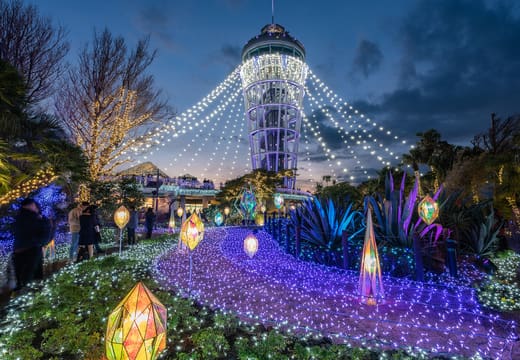
Photos show the actual places, licensed under Creative Commons and credited to their photographers.
Find hotels in Tokyo
Browse live availability and compare prices for your dates.
See hotels near Tokyo on Booking.comPrices are for the night of Saturday 24 October. You can change the dates on Booking.com. If you book, Roam Tokyo earns a small commission from Stay22 at no extra cost to you.