Akihabara Apartments (2026): Monthly Rentals, Costs
Akihabara apartments and monthly rentals: where the stock really is, what monthly mansions and serviced apartments cost in yen, and how to skip key money.
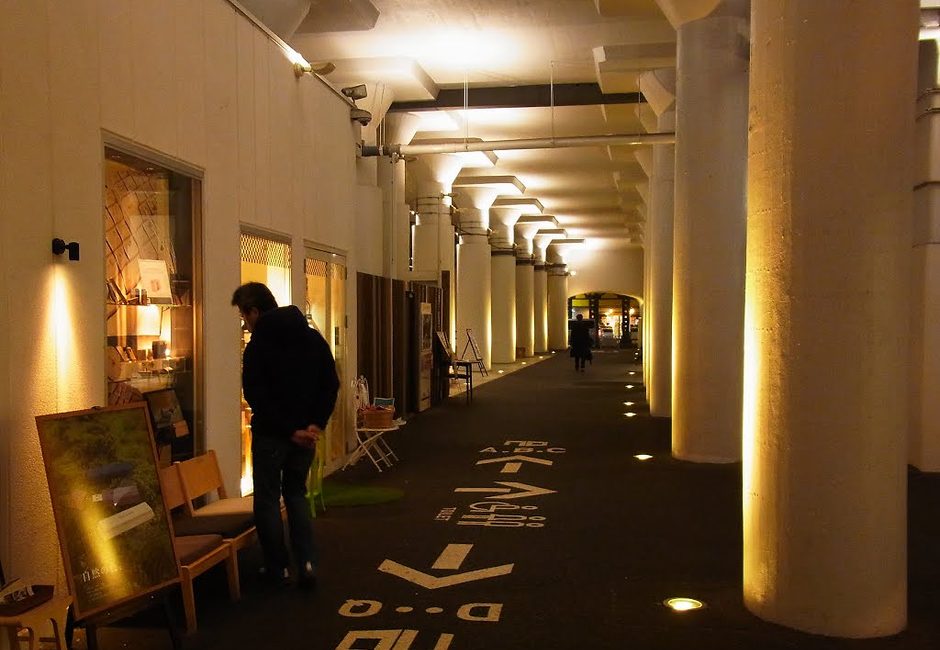
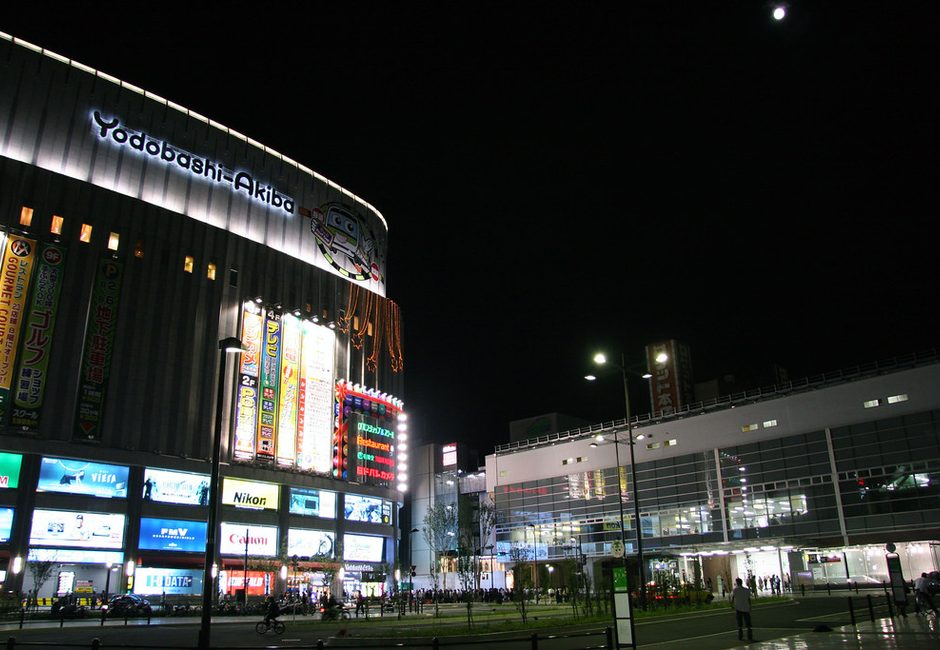
Search for an apartment in Akihabara and the thing you’re picturing, a furnished studio on a side street off Chuo-dori with the electronics district outside the window, mostly doesn’t exist. The core blocks of Akihabara are commercial. The buildings along Chuo-dori and around the station are shops, offices, arcades and hotels, with stock rooms and maid cafes on the upper floors rather than tenants. Rental listings that carry the Akihabara name are almost never inside that grid.
What Akihabara does have is a ring of pockets around it with real apartment stock: Iwamotocho and Kanda to the south and west, Ochanomizu up the hill, Asakusabashi and Kuramae to the east across the Sobu line tracks. All of them are within about ten to twenty minutes on foot of Akihabara Station. This guide covers what kinds of apartment exist in that ring, what they cost, where each block is, how a foreigner books one, and whether the area makes sense as a base for a month or more.
The three kinds of apartment you’ll find
Apartment listings around Akihabara fall into three categories, and the category decides the price, the paperwork and how long you can stay.
Monthly mansions are the workhorse of the Tokyo mid-term market: a furnished studio or one-room apartment rented by the month, usually with a one-month minimum and a practical ceiling of around three, though many operators will extend. Utilities and internet are bundled into the rent, the unit comes with a bed, a small kitchen and a washing machine, and there’s no key money, no deposit beyond a modest cleaning fee and no guarantor. You pay by card, in advance, on a short fixed-term agreement rather than a lease. If you’re searching for an Akihabara apartment, this is the category you should be looking at.
Serviced apartments sit a tier above. The unit is similar, often a little bigger and better finished, but the building runs more like a hotel: staffed reception, weekly cleaning with linen changes, sometimes a gym or lounge, and English-speaking staff as standard. The price reflects it. They make sense for corporate relocations, for anyone who wants a hotel’s convenience with a kitchen, and for stays where the company is paying. Minimum stays run from a week upwards.
Short-term rentals are the nightly listings on vacation rental platforms. Japan’s minpaku law caps registered home-sharing rentals at 180 nights a year and requires every listing to carry a registration or licence number, which legitimate listings show on the page. Book only listings that show a licence number. For anything over two weeks, a monthly mansion is nearly always cheaper and more predictable than stringing nightly bookings together.
What apartments in Akihabara cost
Prices in the Akihabara ring are lower than Shibuya or Roppongi and roughly in line with Ueno, because the area is central without having a fashionable address. The monthly ranges below are typical asking rents for a compact studio, the standard unit in this market. They move with the season and the building’s age, so treat them as a guide rather than a quote. One-bedroom units add roughly 30 to 50 percent.
| Type | Length of stay | Typical cost | What is included |
|---|---|---|---|
| Monthly mansion, compact studio | 1 to 3 months | 120,000 to 200,000 yen per month | Furniture, utilities, internet, no key money or deposit |
| Serviced apartment, studio | 1 week to several months | 200,000 to 350,000 yen per month | Everything above plus cleaning, linen, reception |
| Short-term rental, licensed | Nightly, under 30 nights | Moves with the dates like a hotel; check your dates on the map | Furniture, utilities, cleaning fee charged separately |
| Hotel room, for comparison | Nightly | Akihabara median US$224 per night in the price index | Daily housekeeping, no kitchen, no washing machine |
The row that matters is the last one. The weekly hotel price index put Akihabara’s median hotel rate at US$224 a night on 20 October 2026. Multiply even a modest business-hotel rate by 30 nights and it runs well past a monthly mansion at 160,000 yen, before you’ve eaten every meal out because the room has no kitchen. The crossover where an apartment beats a hotel is somewhere around ten nights to two weeks, depending on the hotel rate. Below that, hotels win on flexibility and minimum-stay rules bite. Above it, the apartment wins on cost. The cheapest end of the monthly range usually means an older building or a smaller unit. The 150,000 to 180,000 yen band is where most decent, recently renovated studios land.
Where the apartments actually are
Four pockets hold nearly all the realistic stock, and the walk to Electric Town differs by only a few minutes between them.
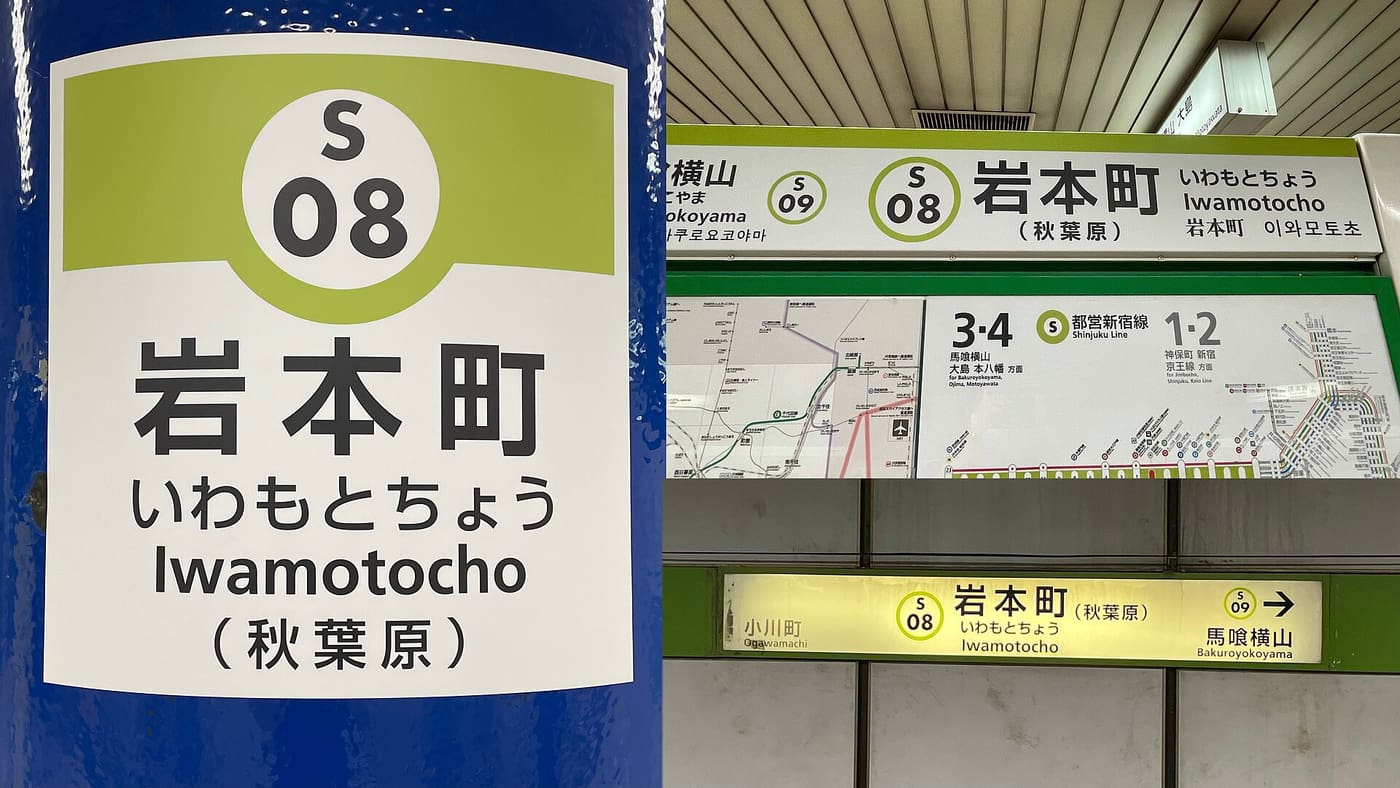
Iwamotocho is the first block south-east of the station, across the Kanda River along Yasukuni-dori. It’s a calm office-and-residential mix with mid-rise apartment buildings on the side streets, a few wholesale shops left over from the district’s textile past, and a Shinjuku Line station of the same name. It’s the closest pocket to Akihabara proper, about five minutes on foot, and the most likely location for a listing that says Akihabara. Evenings are calm once the office workers go home.
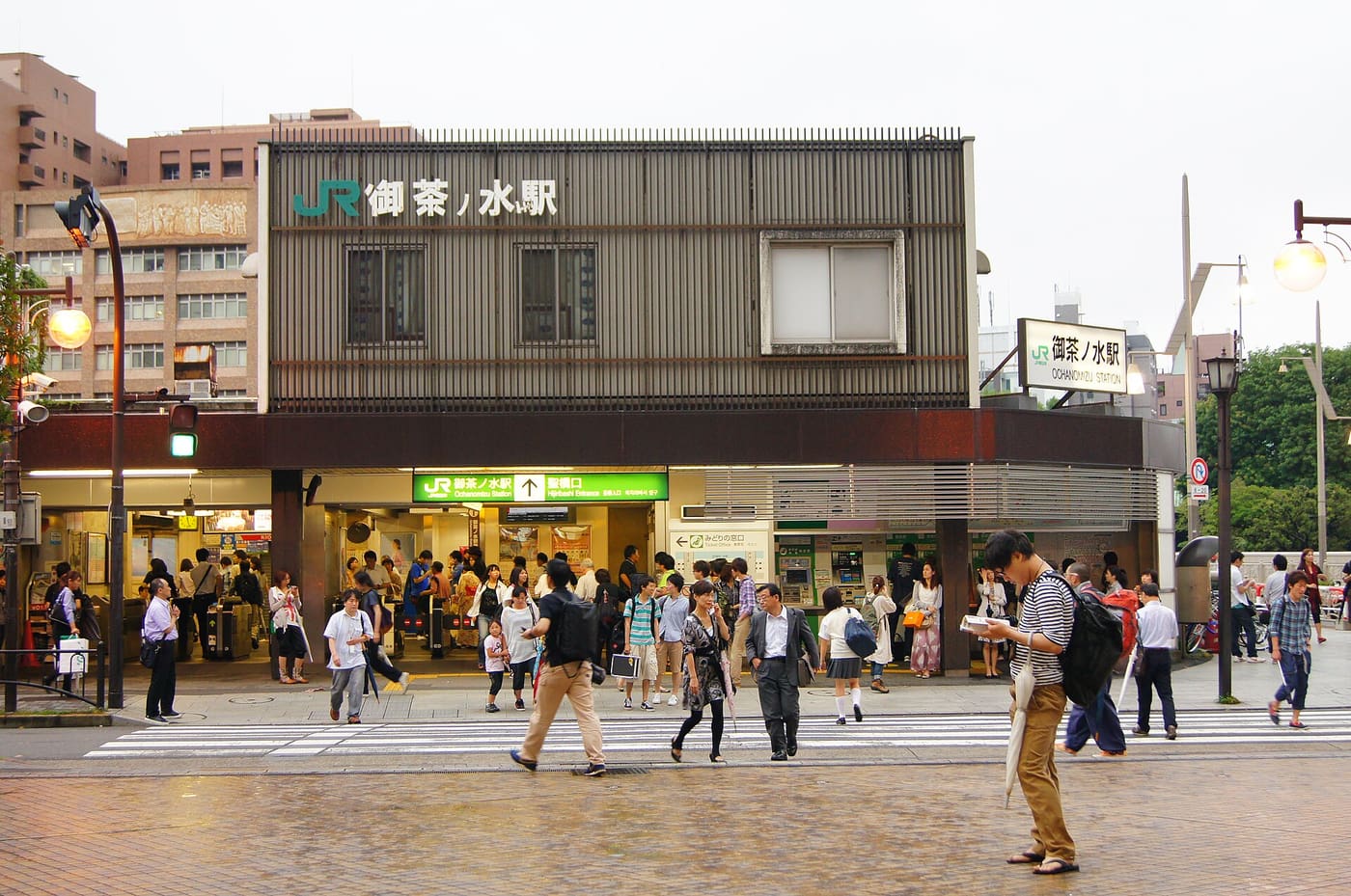
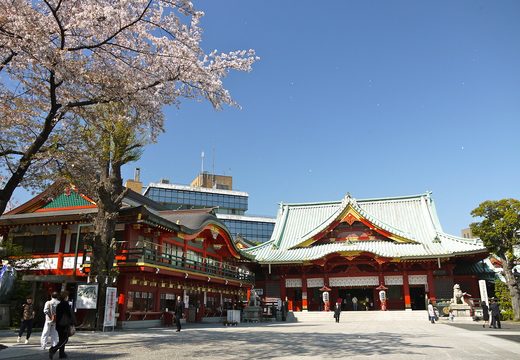
Kanda and Ochanomizu lie west and north-west. Kanda is the older commercial heart, a dense grid of small buildings with ramen shops below and apartments above, served by the JR Chuo and Yamanote lines and the Ginza Line. It eats well for a long stay: Kanda Yabu Soba is the head shop of one of Japan’s great soba lineages, Kikanbo does the chilli-and-sansho miso ramen the district queues for, and Kanda Myojin on the hill is the shrine the Akihabara tech crowd adopted. Ochanomizu climbs the hill above it, a university district with music shops and a more collegiate feel. Apartments here tend to be in older buildings, but the location is exceptional. The Chuo Rapid puts Shinjuku about ten to fifteen minutes away and the Marunouchi Line runs straight to Tokyo Station and Ginza.
Asakusabashi is one stop east on the Sobu line and a ten-minute walk along the tracks. It’s a wholesale district for beads, dolls and stationery, busy with trade by day and nearly silent at night. The Toei Asakusa Line adds direct trains to Haneda and Narita, a big advantage if you’re flying in and out during a longer stay. Rents tend to sit at the lower end of the ring.
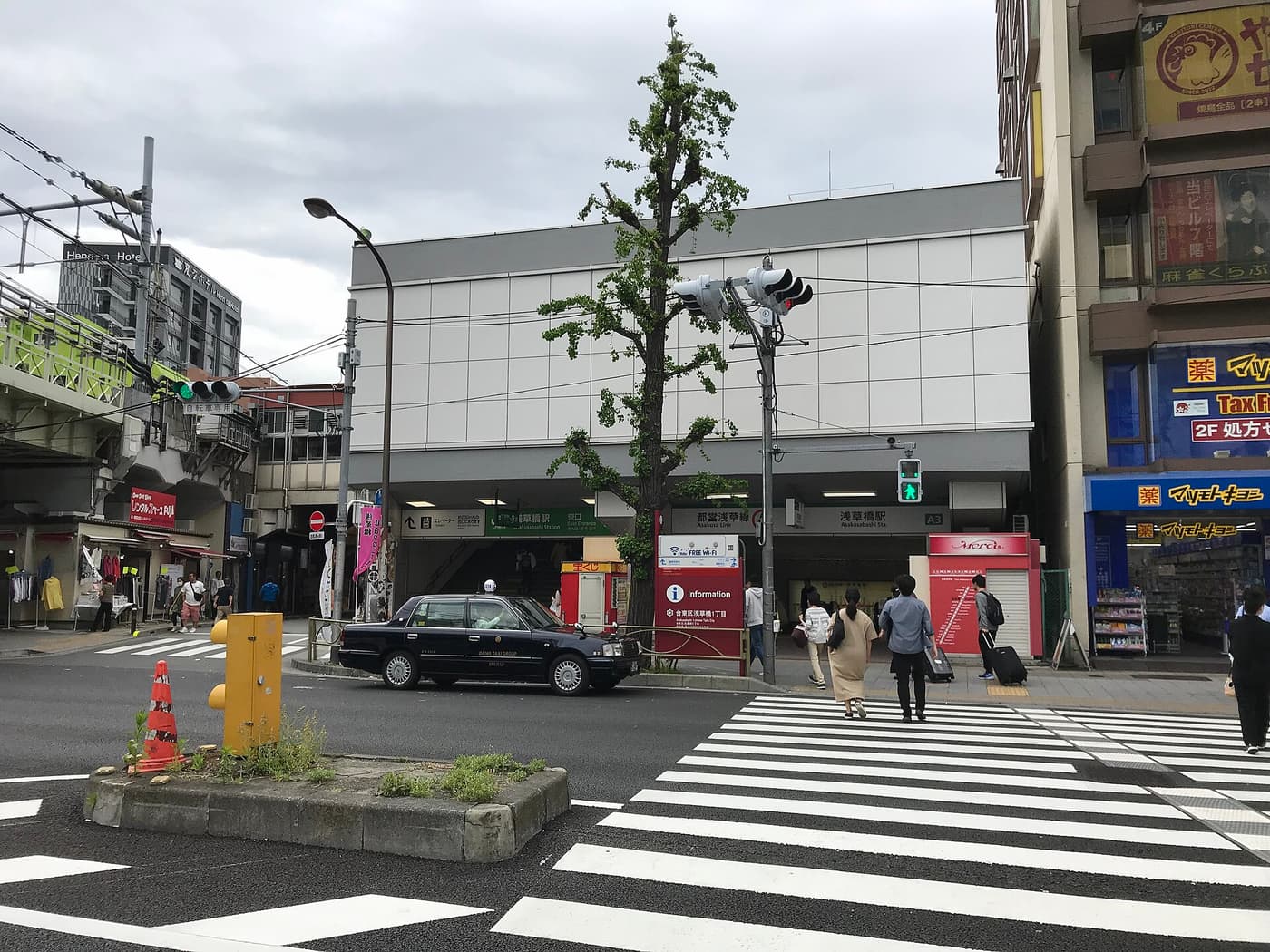
Kuramae is a further ten minutes north-east along the Sumida River, and the most residential of the four. Over the past decade it has filled with small coffee roasters, leather workshops and stationery makers, and it has the neighbourhood feel Akihabara lacks: a supermarket, a riverside promenade, a park. Leaves Coffee Roasters and Dandelion Chocolate are the two pins that explain the area’s reputation. The Oedo and Asakusa lines serve it, and Senso-ji is a fifteen-minute walk north, so the Asakusa neighbourhood guide doubles as the guide to Kuramae’s evenings. Choose Kuramae for the living, not for the proximity. Electric Town is about twenty minutes on foot.
Where to search
The apartment market and the hotel market use different shelves, and searching the wrong one is why so many people conclude there are no apartments in Akihabara. For a stay of a month or more, search the monthly mansion aggregators, the English-language portals that list furnished studios from dozens of operators by station and by month, and filter on Akihabara, Kanda, Iwamotocho, Asakusabashi and Kuramae rather than on the district name alone, because operators file the same building under whichever station sells. Serviced apartment brands run their own booking sites rather than listing on the aggregators, so search them by brand, filter to central Tokyo, and check each building’s map pin against Akihabara Station before you assume the name means the district. Vacation rental platforms hold the licensed short-term stock and are the only realistic route for stays under a month.
For anything under 30 nights, the Tokyo travel map is worth a look as well. Put your dates in and use Search this area for hotels over the Akihabara ring, and the price pills that come back include apartment-style stays and aparthotels alongside the business hotels, quoted for your dates. It won’t find a monthly mansion, but it shows what nightly supply exists in each pocket before you commit to a longer contract.
How foreigners rent here
The mid-term market was built for exactly this situation. Monthly mansion and serviced apartment operators rent to foreigners as a matter of course, and the paperwork is deliberately light: a passport, a credit card, and sometimes a copy of an onward ticket or work contract for longer stays. There’s no guarantor, no Japanese bank account, no residence card requirement and no landlord interview. You book online in English, and the contract is a fixed-term agreement that ends on the checkout date. For anything from one to three months, and often up to six, that’s the whole process.
A conventional lease is a different animal. A standard Japanese rental runs on a two-year term and comes with key money (a non-refundable gift to the landlord of one to two months’ rent), a deposit of similar size, an agency fee, and a guarantor company that charges its own fee to vouch for you. The move-in bill can reach four to six months’ rent before you’ve paid the first month, and some landlords still turn foreign applicants down outright. The monthly rent is lower, sometimes by a third, but the sums only work for stays beyond roughly six months to a year. Daniel has been through the full process himself, and his first-hand account of the fees, the sites and how to avoid the foreigner premium is in the guide to getting an apartment in Tokyo.
The practical rule: under six months, use a monthly mansion or serviced apartment and skip the lease. Over a year, take the lease and accept the move-in costs. In between, compare total spend rather than monthly rent.
What to check before you book
Listings in this market are straight more often than not, but the details that ruin a month are rarely in the headline.
Internet speed and type. A bundled connection can mean fibre to the unit or a shared building line that crawls at 8 PM. Ask for the connection type, and if you’re working, ask whether the operator will confirm a speed in writing.
Washing machine in the unit. Most monthly mansions have one. Some older buildings use a shared laundry room, and some short-term rentals send you to a coin laundry. Over a month, that difference matters.
Minimum stay and extension terms. Confirm the minimum, the notice period for extending, and whether the rate holds if you extend. Operators sometimes reprice at the second month.
The cleaning fee. A one-time cleaning charge is normal and runs from a few thousand yen to around 30,000 for a studio. It isn’t refunded, so count it in the total.
Whether “Akihabara” means Akihabara. Operators name properties after the best-known station within reach, and a listing called Akihabara can sit in Asakusabashi or Kuramae, fifteen to twenty minutes on foot. Check the map pin against the station and decide whether the walk suits you.
Noise from Chuo-dori. The few units near the main strip face a street that runs loud until late and fills with pedestrians on Sunday afternoons, when it closes to cars. Anything facing Chuo-dori or the station plaza needs good windows. One block back is noticeably calmer.
Is Akihabara the right base for a long stay?
Akihabara suits a particular kind of long stay well. If you’re working in Kanda, Otemachi or Marunouchi, you get a walk or a two-stop commute. If your project involves the electronics trade, gaming or the anime industry, you’re at the centre of it. The transport is among the best in the city: three JR lines, the Hibiya Line, the Tsukuba Express, and Tokyo Station a few minutes away for the shinkansen. Prices are lower than the west side, and the surrounding pockets are calm enough to sleep in.
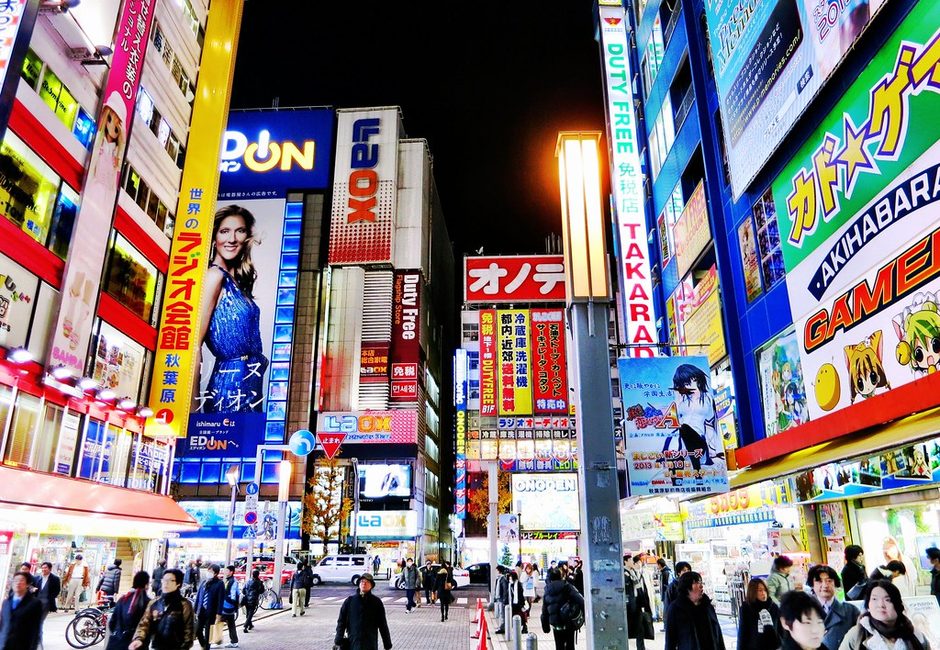
It suits others less well. The core district has few supermarkets, few parks and a Sunday crowd that turns the main street into a slow river of people. If you want a neighbourhood with a morning routine and streets that empty at night, look at Kuramae or Asakusabashi, or shift one stop north to Ueno, where the park, the market streets and the residential blocks of Yanaka make a more lived-in base. The Ueno accommodation guide covers that option, and the where to stay in Tokyo hub compares every major district for stays of any length.
For a short trip where a hotel makes more sense, the Akihabara hotel guide covers the business hotels, capsules and guesthouses around the station. To see how the four apartment pockets sit against the rest of the city, the interactive Tokyo travel map plots every hand-picked place with walk times.
Frequently Asked Questions
Are there apartments in Akihabara?
Very few inside the core district, because the blocks around Akihabara Station and along Chuo-dori are commercial. The apartment stock sits in the surrounding pockets of Iwamotocho, Kanda, Ochanomizu, Asakusabashi and Kuramae, all within about ten to twenty minutes on foot. Listings that use the Akihabara name are almost always in one of those areas, so check the map pin rather than the title.
How much is a monthly apartment in Akihabara?
A furnished compact studio in a monthly mansion around Akihabara runs roughly 120,000 to 200,000 yen a month with utilities and internet included and no key money, deposit or guarantor. Serviced apartments with cleaning and reception run roughly 200,000 to 350,000 yen. Both undercut a business hotel over 30 nights by a wide margin once you multiply out the hotel’s nightly rate.
Can foreigners rent an apartment in Akihabara?
Yes, and for stays of one to six months it’s straightforward. Monthly mansion and serviced apartment operators rent to foreigners with a passport and a card, contracts are in English, and there’s no guarantor or Japanese bank account requirement. A conventional two-year lease involves key money, a deposit, an agency fee and a guarantor company, and only makes financial sense for stays beyond about six months to a year.
Serviced apartment or hotel in Akihabara?
For under ten nights, a hotel: no minimum stay, cheaper in total for a short stay, daily housekeeping included. For two weeks or more, a serviced apartment or monthly mansion wins on total cost and adds a kitchen and a washing machine. Serviced apartments make the most sense when someone else is paying or hotel-style services matter. A monthly mansion is the better value for a self-funded stay.
Is Akihabara a good place to stay long term?
It’s a strong base if you work in the Kanda and Otemachi office districts or in the electronics and anime trades, with transport links that reach anywhere in the city quickly. It’s a weaker base if you want a residential feel, green space or calm Sunday streets. In that case Kuramae and Asakusabashi keep the access with more neighbourhood, and Ueno, one stop north, adds a park and a local market scene.
Places in this guide
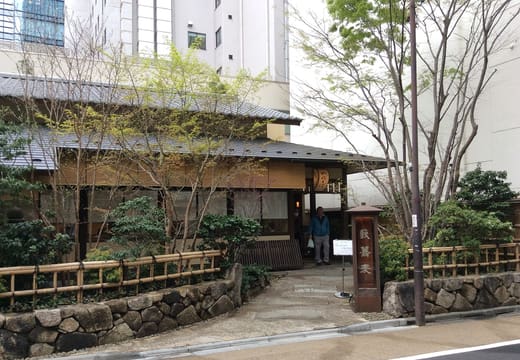
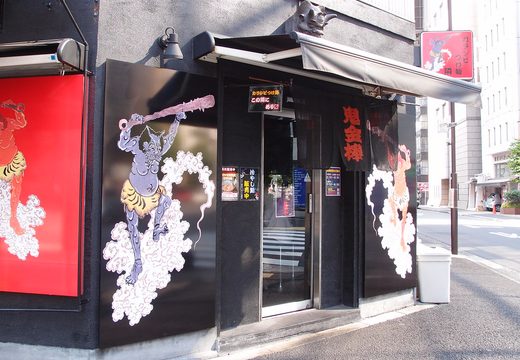
Photos show the actual places, licensed under Creative Commons and credited to their photographers.
Find hotels in Akihabara
Browse live availability and compare prices for your dates.
See hotels near Akihabara on Booking.comPrices are for the night of Saturday 24 October. You can change the dates on Booking.com. If you book, Roam Tokyo earns a small commission from Stay22 at no extra cost to you.