Akihabara Hotels and Apartments: Is It a Good Place to Stay?
Where to stay in Akihabara: named hotels by the station, quieter blocks near Suehirocho, monthly apartments from 120,000 yen, and the weekly median rate.
Stay beside the station, at remm Akihabara or JR-East Hotel Mets Premier Akihabara, if you’re here for Electric Town and early trains. Stay a few blocks out, at Dormy Inn Akihabara by Suehirocho or one of the APA hotels east of the tracks, if you’d rather have a calmer street and a lower rate. And if nightlife or a neighbourhood feel matters to you, don’t base yourself in Akihabara at all. Ueno, one Yamanote stop north, has both, and Asakusa is about five minutes away on the Tsukuba Express.
Looking for an apartment rather than a hotel room? Skip to apartments and monthly rentals below for where the stock is and what it costs, or read the full guide to apartments in Akihabara.
On price, the weekly hotel price index put Akihabara’s median at US$224 a night for a two-night stay a month out (index of 20 October 2026, 34 listings). Ueno, one stop north, came in at US$230 and Asakusa at US$262. If you want live numbers, put your dates into the Tokyo travel map and hit Search this area for hotels. Every pin quotes those dates, and the Akihabara cluster fits on one screen.
Akihabara’s geography and train access
Akihabara is compact. There’s Soto-Kanda, west of the JR tracks, where Chuo-dori and the electronics stores run north from the station to Suehirocho, and there’s Kanda-Sakumacho, east of the tracks, which is calmer and where several of the hotels are. Kanda proper is a few minutes south and Ueno a few minutes north. Kuramae is a separate district about 1.5 km north-east in Taito ward, not part of Akihabara.
Akihabara Station has the JR Yamanote, Keihin-Tohoku and Sobu lines, the Tokyo Metro Hibiya Line and the Tsukuba Express. From here you’re in Ueno in about 4 minutes, at Tokyo Station in 4, in Shinjuku in under 20 on the Sobu Line (quicker if you change to the Chuo Rapid at Ochanomizu), in Shibuya in about 25, in Asakusa in about 5 on the Tsukuba Express and in Roppongi in about 20 on the Hibiya Line. Not many districts in Tokyo give you that spread from one platform, and it’s the best reason to sleep here.
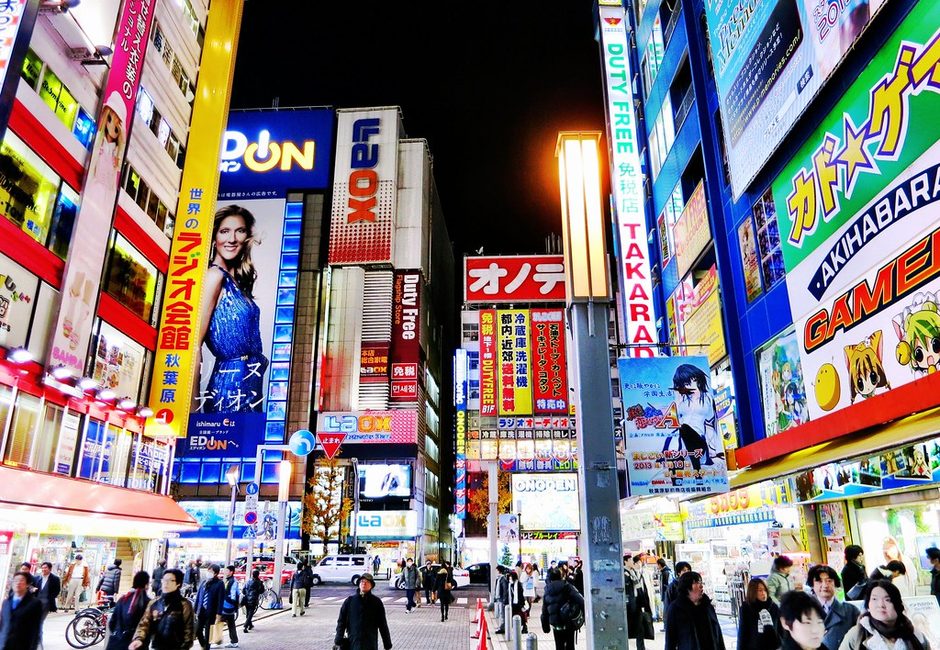
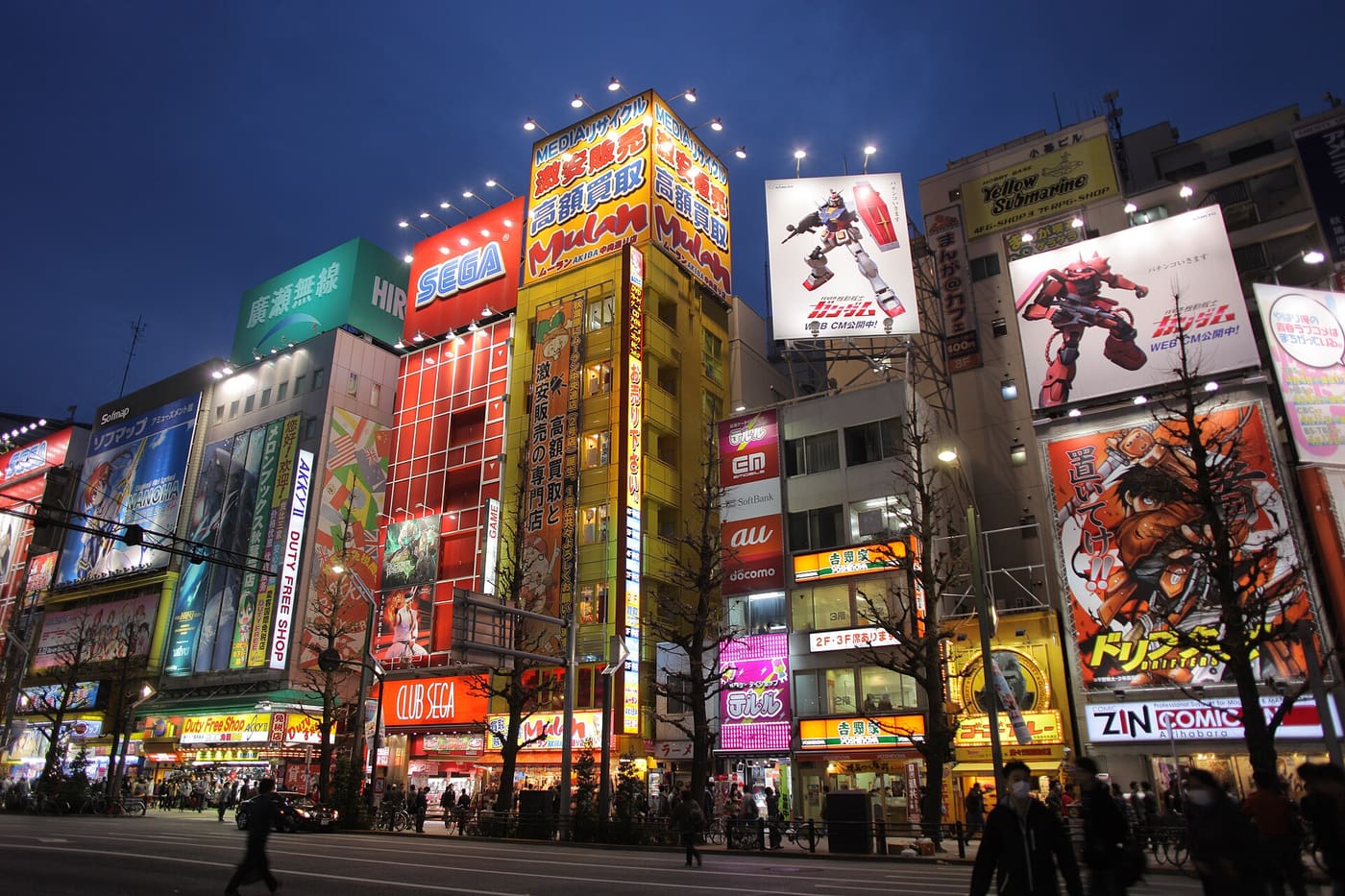
The blocks right around the station and along Chuo-dori don’t let up. Maid cafes, figure shops and electronics megastores stacked seven floors high. North past Suehirocho and east across the tracks it thins out into office blocks and old Kanda streets, with sushi counters and izakaya that serve the workers rather than the visitors. You can walk all of it. The district is a fifteen-minute square.
Hotels and guesthouses
Beside the station
remm Akihabara at 1-6-5 Kanda-Sakumacho is run by the Hankyu-Hanshin-Daiichi group and sits on the east side of the station. The operator’s site describes it as directly connected to JR Akihabara Station’s Central Gate and two minutes from Hibiya Line exit 3. Rooms are small. What you’re paying for is the zero-minute walk to the platforms. See prices
Hotel links go through Stay22: if you book, Roam Tokyo earns a small commission at no extra cost to you.
JR-East Hotel Mets Premier Akihabara at 1-17-4 Soto-Kanda is the railway company’s own hotel, on the Electric Town side. Its site puts it one minute from the JR Electric Town (south) exit. It’s the one to pick if you’re arriving late or leaving early, and being on the west side means Chuo-dori is on the doorstep. See prices
Both trade room size for position. Expect the higher end of business-hotel rates on Friday and Saturday nights.
A few blocks out
Dormy Inn Akihabara at 4-12-5 Soto-Kanda sits at the north end of the district, beside Suehirocho station on the Ginza Line rather than at Akihabara itself. It’s one minute from exit 3 of Suehirocho and five from the JR Electric Town exit. You get the chain’s big public bath and free late-night noodles, and the Suehirocho blocks are calmer at night than anything nearer the JR station. Ueno’s Okachimachi is a short walk north. See prices
APA Hotel Akihabara-Ekimae at 2-13-20 Kanda-Sakumacho is on the east side of the tracks. APA Hotel Akihabara-Suehirocho-Ekimae, which opened in July 2024 with 205 rooms, is one minute from Suehirocho Station on the Chuo-dori side. Both are what APA always is: spotless, efficient, small, with rates that drop sharply midweek. The east-side one has the calmer street. Prices: Akihabara-Ekimae, Suehirocho-Ekimae.
Capsule and pod hotels
The Yamanote stretch through Kanda, Akihabara and Ueno has a rotating cast of modern pod hotels, and they open, rebrand and close often enough that any name you read here would be out of date within a year. Check the map pins for what’s open within a few minutes of the station right now. What a capsule night is like, and who should skip the format, is in the capsule hotel guide.
Hostels
Nui. Hostel & Bar Lounge at 2-14-13 Kuramae is the design-led hostel people recommend most to Akihabara visitors, so it’s worth being clear that it’s in Kuramae, about fifteen minutes’ walk north-east across the Taito line, not in Akihabara. Dorms and private rooms, a bar that pours coffee by day, and a calmer crowd than most Tokyo hostels. Dandelion Chocolate and Leaves Coffee are round the corner. See prices
Themed rooms
Akihabara attracts character-decorated rooms and gaming setups. Most are gimmicky and overpriced, and they come and go fast. Unless the theme is the point of the trip, a plain business hotel two minutes further from the neon will give you a better night’s sleep.
Apartments and monthly rentals in Akihabara
Hotels stop making sense at around the two-week mark. For a month or more, the answer in this part of town is a furnished monthly mansion or serviced apartment in the blocks just outside Electric Town. They skip the key money and guarantor system that makes Japanese leases painful for foreigners.
Don’t expect a flat on Chuo-dori, though. The blocks around the station are shops, offices, arcades and hotels, and rental listings that carry the Akihabara name are almost never inside that grid. The stock sits in four pockets around it, all within about ten to twenty minutes on foot of Akihabara Station.
- Iwamotocho, across the Kanda River to the south-east, is about five minutes away and the likeliest spot for a listing called Akihabara.
- Kanda and Ochanomizu, to the west and up the hill, mostly have older buildings, with the Chuo Rapid getting you to Shinjuku in about ten to fifteen minutes.
- Asakusabashi, one stop east on the Sobu Line, goes nearly silent at night, and the Toei Asakusa Line runs straight to Haneda and Narita.
- Kuramae is the most residential of the four, with a supermarket, a riverside promenade and a park, but Electric Town is about twenty minutes’ walk.
| Type | Typical cost | What you get |
|---|---|---|
| Monthly mansion, compact studio | 120,000 to 200,000 yen a month | Furniture, utilities and internet, no key money, deposit or guarantor |
| Serviced apartment, studio | 200,000 to 350,000 yen a month | The same plus cleaning, linen and a staffed reception |
| Licensed short-term rental | Nightly, moves with the dates like a hotel | Furniture and utilities, cleaning fee on top |
A monthly mansion usually has a one-month minimum, and you pay by card on a fixed-term agreement with a passport as your paperwork. Where an apartment starts to beat a hotel is somewhere around ten nights to two weeks, depending on the hotel rate. For shorter stays on a rental platform, book only listings that show a licence or registration number. Japan’s minpaku law requires one on every legal listing.
The guide to apartments in Akihabara goes through each pocket block by block, where to search, and what to check before you book (internet type, the washing machine, extension terms). If you’re thinking about a proper two-year lease instead, Daniel’s guide to getting an apartment in Tokyo covers the fees.
Eating and living in Akihabara
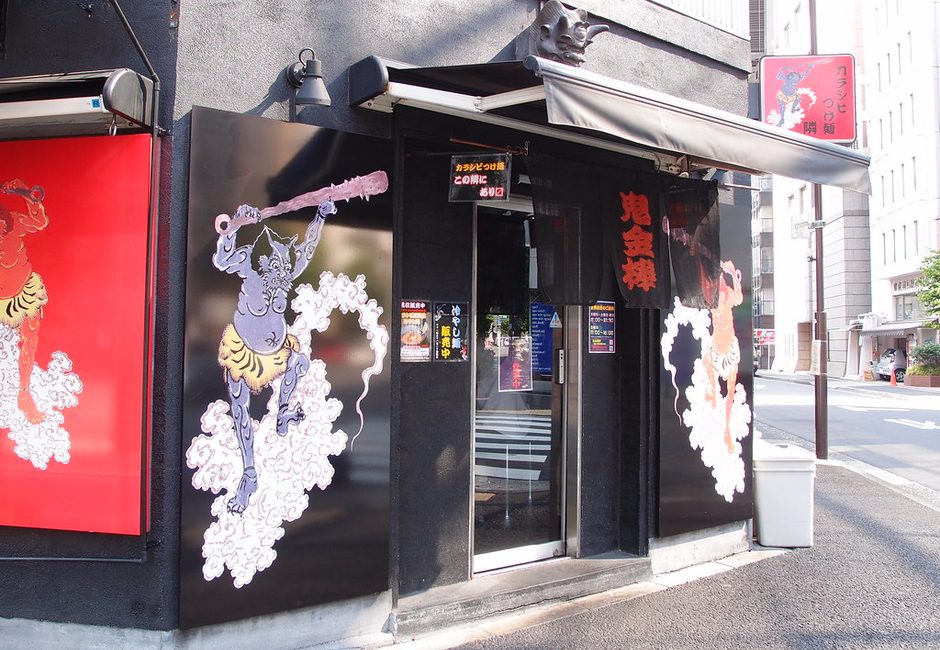
The food splits by street. Chuo-dori and the station blocks are chains, conveyor sushi and tourist ramen. None of it is bad and most of it is forgettable. The better eating is in Kanda and Ogawamachi, a few minutes south and west, one of the densest ramen districts in the city because it lives off office lunches. Kikanbo for the numbing miso bowl and Kanda Yabu Soba for the opposite end of the scale are both walkable. Ichiran has a branch in Akihabara for solo-booth ramen late into the evening.
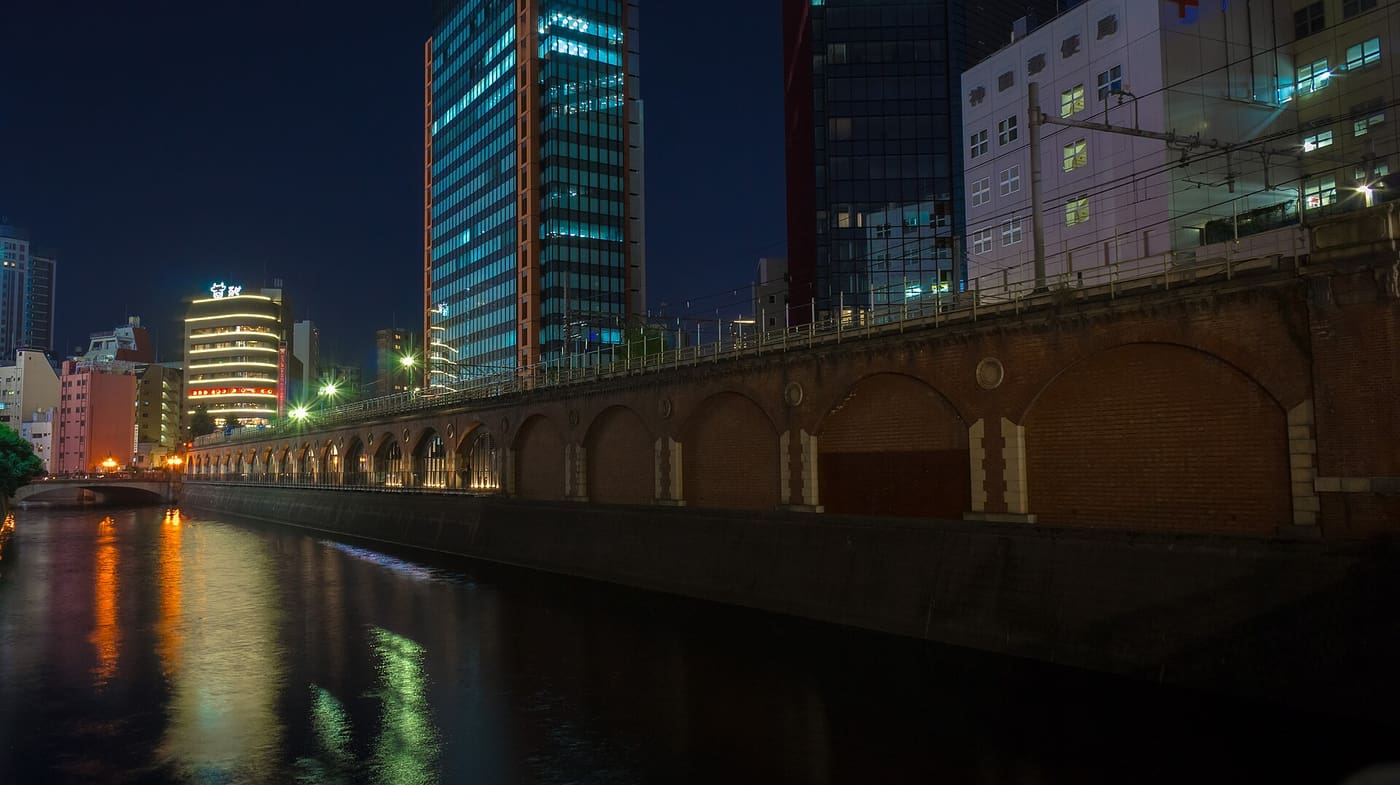
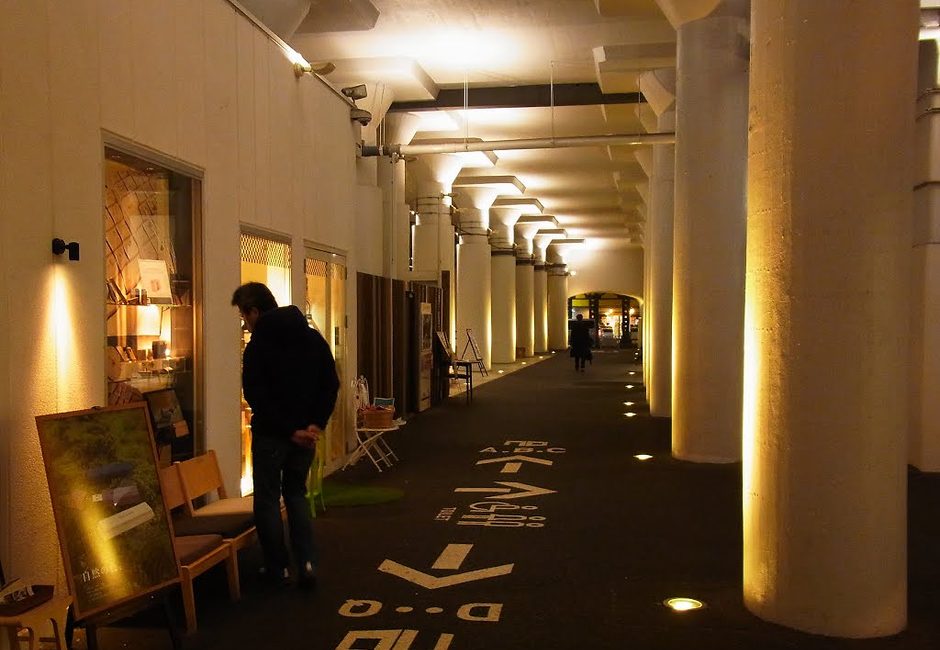
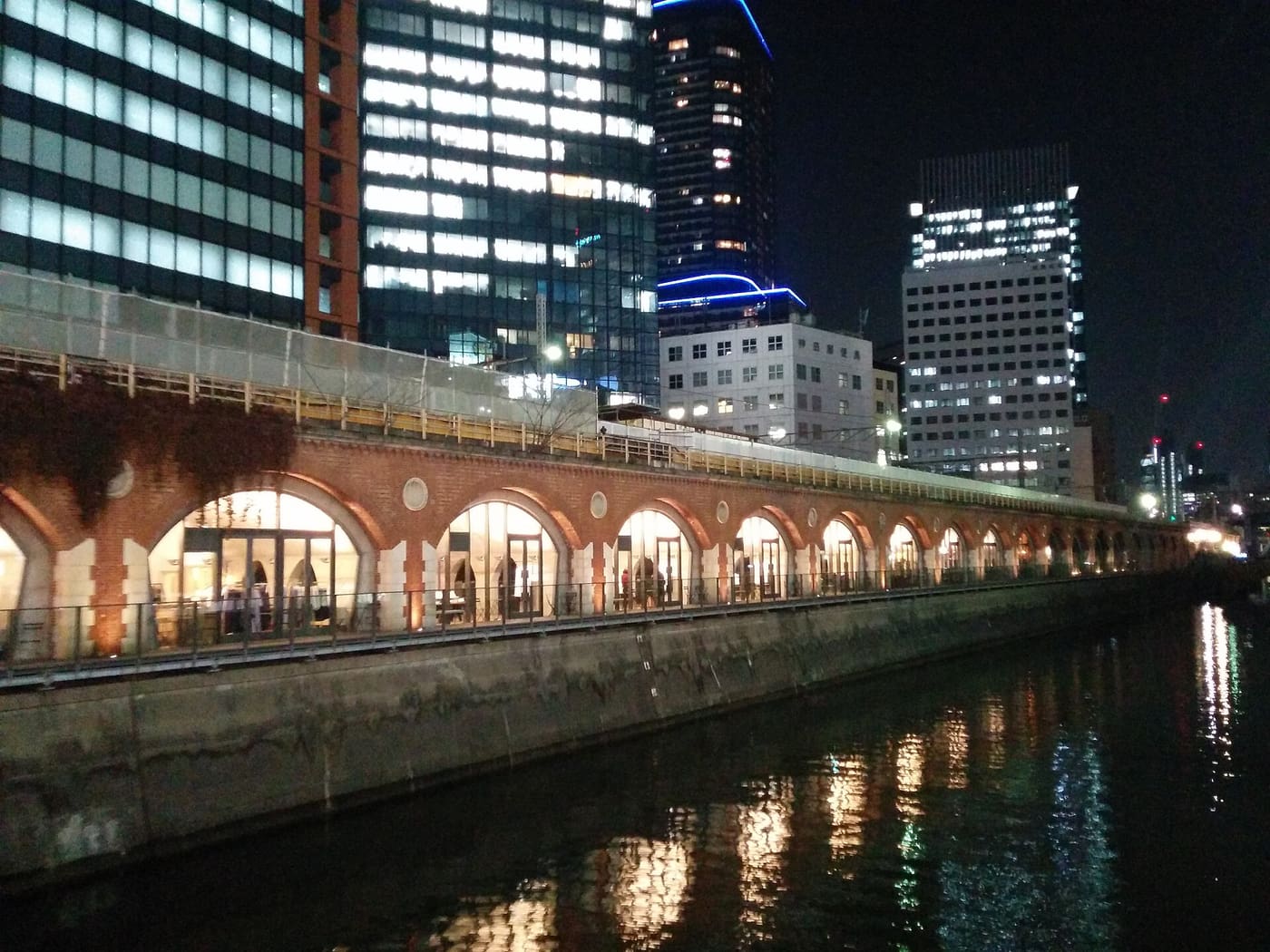
Kanda Myojin, up the hill west of Suehirocho, is the neighbourhood’s shrine and a good place to walk off a late arrival. Under the tracks towards Okachimachi, 2k540 Aki-Oka Artisan is a strip of craft workshops and the calmest thing in the district.
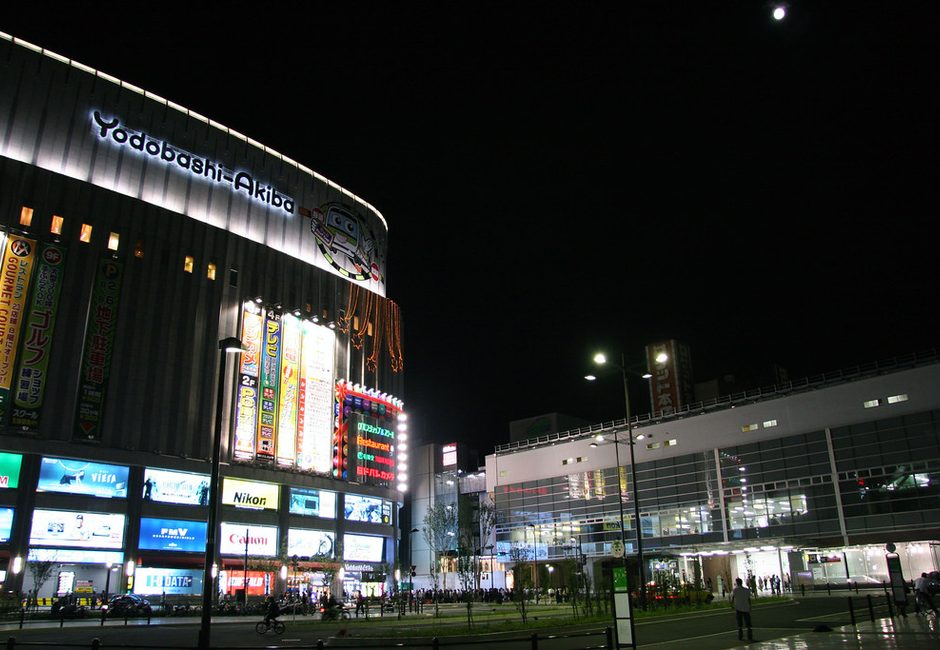
Yodobashi-Akiba, the electronics megastore on the east side of the station, is the biggest of the district’s stores, and there’s a convenience store every few metres, open around the clock. There’s no department-store food hall in Akihabara. The nearest is Matsuzakaya at Okachimachi, one stop north.
Best times to stay
Summer (July to August) is the peak for international visitors. The pavements on Chuo-dori are packed by early afternoon and rates rise with the crowds. Cherry blossom season pulls everyone to Ueno Park, one stop away, which makes Akihabara a practical base for hanami without sleeping in the crush. Autumn is the comfortable season. Winter is the empty one, with Christmas lights on the main streets and an almost total shutdown over New Year (31 December to 3 January), when most independent restaurants close.
Practical tips
Noise. Ask for a room away from Chuo-dori, or pick the east side of the tracks. The Electric Town side is loud until the shops close at about 8 PM, and the pachinko parlours go on later.
Trains. A Suica or Pasmo card with a few thousand yen on it covers every line here. The Tsukuba Express is underground with its own entrances, separate from the JR concourse.
Airports. From Haneda, take the Tokyo Monorail to Hamamatsucho, then the Yamanote or Keihin-Tohoku Line north, about 8 minutes for the second leg. From Narita, take the Narita Express to Tokyo Station and then the Yamanote or Keihin-Tohoku Line 4 minutes north, or the Keisei Skyliner to Ueno and then one Yamanote stop.
Senso-ji and Asakusa. About 5 minutes on the Tsukuba Express. On foot it’s roughly 2.5 to 3 km, a walk of 35 to 40 minutes.
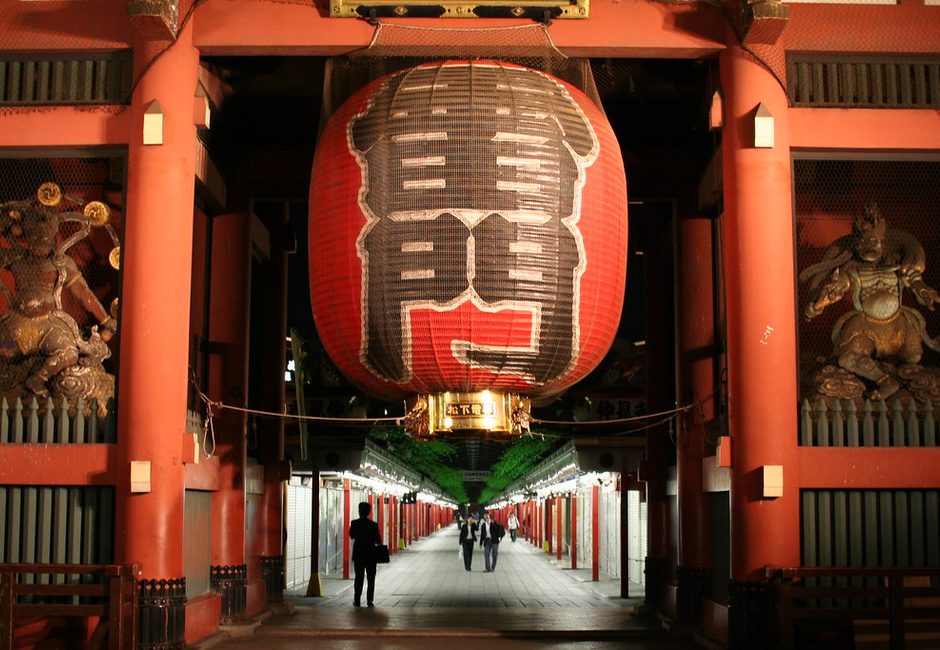
If Akihabara turns out to be too much. The Ueno guide covers the hotels one stop north, the Asakusa guide covers the ryokan and hostels to the east, and the Yanaka neighbourhood guide covers the old-town walk you can start from either.
Related reading
- Apartments in Akihabara: Monthly Rentals, Serviced Apartments, and What They Cost
- Where to Stay in Tokyo: the areas compared
- Where to Stay in Ueno, Tokyo
- Asakusa vs Ueno
- First Time in Tokyo: The Best Neighborhood to Stay In
Frequently asked questions
Is Akihabara a good place to stay on a first trip?
Usually not as your only base. Akihabara suits people who want the electronics and anime shops, and cheaper business hotels. For a first visit, the west side of Shinjuku has the easiest mix of train lines and hotels, and Asakusa gives you more of an old-Tokyo feel. Ueno is the nearest middle ground, one stop away.
Is Akihabara safe to stay in?
Yes. It’s busy and well lit until late, with more foot traffic and more police around than in residential districts. Keep an eye on your bag in the Chuo-dori crowds, and that’s about it.
How long does it take to reach Akihabara from the airports?
From Narita it’s about 60 to 75 minutes via the Narita Express to Tokyo Station plus 4 minutes on the Yamanote or Keihin-Tohoku Line, or the Keisei Skyliner to Ueno plus one stop. From Haneda it’s about 40 minutes via the Tokyo Monorail to Hamamatsucho and the Keihin-Tohoku Line north.
Should Akihabara hotels be booked months ahead?
For ordinary weeks, two to four weeks ahead gives you a good choice. For cherry blossom season, Golden Week, the summer holidays and New Year, book two to three months out. Midweek rates at the business hotels here drop noticeably compared with Friday and Saturday, so a Sunday-to-Thursday stay is the cheapest way to sleep beside the station.
Places in this guide
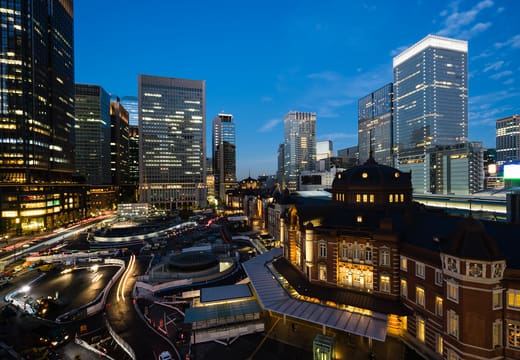
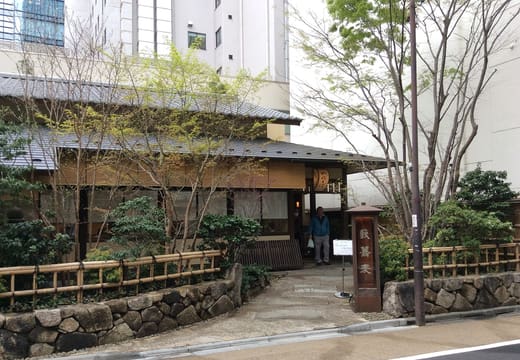
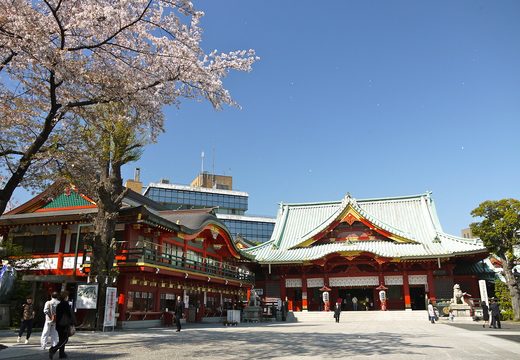
Photos show the actual places, licensed under Creative Commons and credited to their photographers.
Find hotels in Akihabara
Browse live availability and compare prices for your dates.
See hotels near Akihabara on Booking.comPrices are for the night of Saturday 24 October. You can change the dates on Booking.com. If you book, Roam Tokyo earns a small commission from Stay22 at no extra cost to you.